

On this page
Over the last twenty years, the spotlight has been on plastic as a leading source of environmental damage due to its poor recyclability. This has prompted packagers to pursue eco-friendly alternatives, leading them to two industry leaders. Tin and Aluminum. They look similar, they feel similar, and they both offer infinite recyclability. Moreover, both the materials deliver the premium unboxing experience with their vintage yet modern aesthetics. But there is a minor impediment. Choosing the wrong one can lead to inflated shipping costs or damaged goods on the shelf. So, if you don’t know which packaging is the best one, read this blog. This is a tin vs aluminum packaging guide that will help you decide which metal is the right fit for the product, your budget, and your brand.
Understanding Tin and Aluminum Metal Packaging
Usually tin and aluminum are mistakenly thought to be the same but there is a difference between tin and aluminum packaging in terms of chemical properties, price points, and functional strengths. Take a look.
What is Tin Packaging?
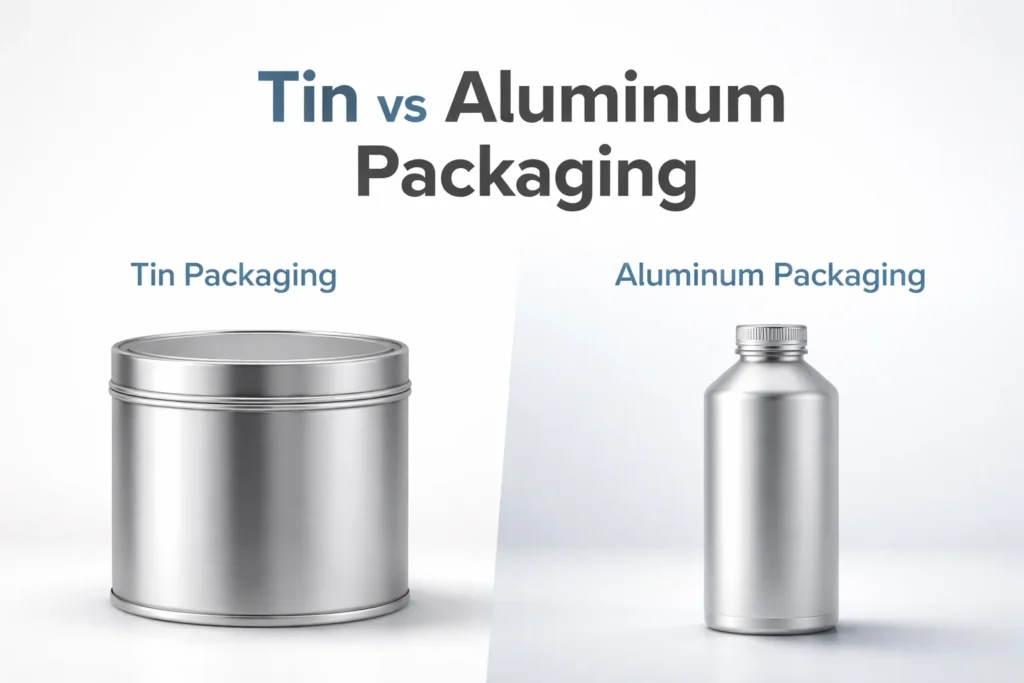
When we talk about tin packaging, there is a misconception that it isn’t actually made of solid tin. Well, this is true because pure tin is a very soft and expensive metal. Thus, a tin packaging is made of “Tinplate” which is a high-quality steel sheet coated with pure tin. It is highly ductile that’s why you can tailor it into custom containers of any size, shape, or style. With their non-porous nature, these containers offer zero permeability for moisture, light, and air. Therefore, tin packaging is widely used in food and industrial goods. Like cookies, chocolates, canned vegetables, paints, and chemical solvents. It extends freshness, locks in the food flavors and taste while keeping the products safe from spoilage.
What is Aluminum Packaging?
Aluminum packaging is lightweight, versatile and contains zero iron content. It is easily recyclable and that’s why it has become the gold standard for modern retail. Aluminum packaging comes in two forms. One is the rigid containers, cans, bottles, and jars while others are the flexible pouches, foil, and tube linings. Therefore, it is widely used for soda and beer cans, hairsprays, deodorants, and collapsible tubes for ointments. Aluminum packaging has a great aesthetic advantage over tin. It has a modern feel and with the help of dry offset or digital printing you can make metallic colors look vibrant on an aluminum can or jar. The best feature of aluminum is its recyclability. It takes 95% less energy for recycling than producing it from scratch. This allows brands to market a very low carbon footprint.
Tin vs Aluminum Packaging” What’s the Difference?
Both the materials offer good durability, high-end packaging aesthetics, and are infinitely recyclable. So does this mean that aluminum and tin are the same? The answer is a big “NO”. Although they possess quite similar properties, they differ in material composition, recyclability, and weight-to-cost ratio.
When comparing tin vs aluminum packaging in terms of durability, tin is the winner. Tin containers have rigid steel walls which makes them rigid and can withstand vertical load. Thus, they are ideal for stacking pallets and are reusable, too. On the contrary, aluminum cans and jars are little malleable and can crush under heavy weight, making them disposable in use.
One of the biggest differences for businesses is the weight-to-cost ratio. Since aluminum is lightweight, it reduces the dimensional weight, transit trips, and overall freight cost. Whereas, tin packaging comprises steel sheets which make it heavier and increases the dimensional weight. Thus, resulting in higher shipping costs, and making aluminum the clear winner of the shipping world.
Finally, it’s the recyclability that makes aluminum the ultimate winner. Although both are sustainable packaging material however, tin requires large magnets to pull it out of mixed waste stream. This makes tin recycling a little more expensive than aluminum.
Now that you know the differences, let’s take a quick review of tin vs aluminum packaging for better understanding.
Features | Tin Packaging | Aluminum Packaging |
Weight | Heavier, Adds a “premium” heft | Lightweight |
Durability | Rigid and Strong Excellent for stacking | Softer, Prone to denting or deformation |
Recyclability | Easy to recycle with magnets | Highly recyclable |
Flexibility | Rigid | Malleable |
Corrosion | Can corrode if tin coating is scratched | Naturally rust-proof |
Design and Branding Potential of Tin vs Aluminum Packaging
When it comes to shelf appeal, the choice between tin and aluminum often dictates the “personality” of your brand. While both offer a metallic sheen that suggests quality, the technical ways they handle ink and texture are vastly different.
For instance if you want your logo or pattern to pop off the package, use tin packaging. It offers sharp and crisp results for embossed, 3D texture. For aluminum use an embossing technique as it is pliable and can flatten during shipping. Similarly, use lithography on tin packaging for intricate detailing, vibrant color layering, and lacquered finish. And digital printing on your aluminum cans for sleek, minimalistic results.
When to Choose Tin Packaging?
When your product’s shelf life depends on a 100% barrier against the elements, tin packaging stands as the ultimate guardian. Therefore, it is recommended to choose tin-made cans, jar, and containers when:
- You are packing dry goods like coffee, cookies, spices, tea, and herbs.
- You want a luxury gift look for your cosmetic and jewelry items.
- Use them for selling industrial products like paint, motor oils, and chemical solvents.
- You need 3D textured embossed designs for a premium packaging to set a higher price point.
When to Choose Aluminum Packaging
If you want your brand to feel as ‘high-tech’ as the product inside, aluminum provides the perfect metallic canvas. It gives a clean, modern look and offers cost-effective branding for small-batch startups. So you can use your aluminum packaging for:
- Packing liquids like soda, beer, or water as it is rust-resistant and can hold acidic liquids.
- Packaging of cosmetic and pharmaceutical items like balms, creams, or collapsible tubes.
- You can also opt for aluminum containers when your goal is to reduce shipping weight and carbon emissions as it is lightweight.
Get Your Tin and Aluminum Packaging from Boxit Packages
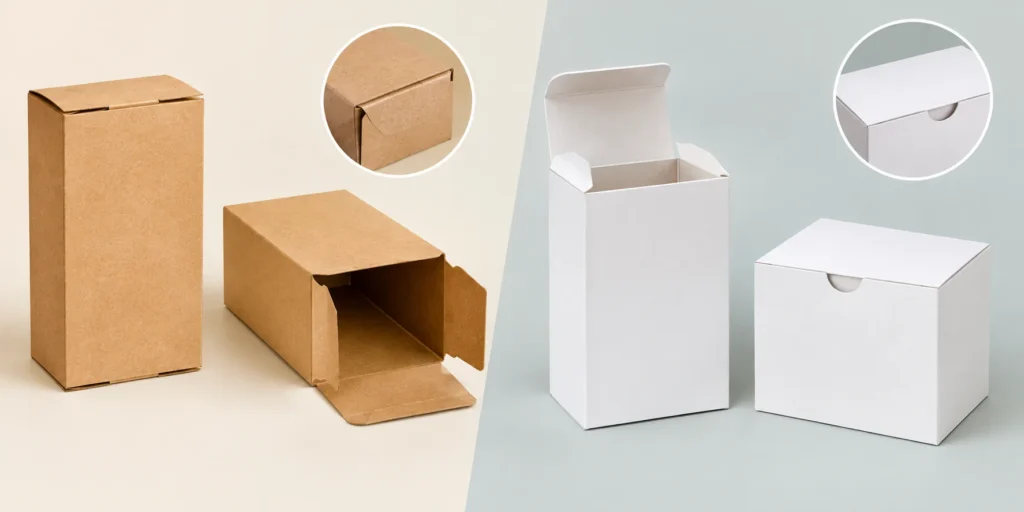
Whether you need a tin can or aluminum jar, quality and reliability is quite important that you can only get at Boxit Packages, a custom packaging company known for innovative packaging solutions. We offer unlimited customization features with eco-friendly cardboard and Kraft packaging, too. Contact us to learn about our amazing packaging services.
Summing It Up!
Overall this debate on tin vs aluminum packaging isn’t about which material is better. It is a guide to help brands to choose the right packaging for their products within their budgets. Since both offer high durability and support recyclability, then choose tin if you need maximum stackability, intricate 3D embossing, and a “gift-worthy” heft. And aluminum if you are shipping liquids, sensitive cosmetics, or if you need to drastically reduce your freight costs. For more information, visit Boxit Packages website to explore a unique range of tin and aluminum containers.
Need custom printed boxes?
Contact us

.jpg)