

On this page
Choosing a custom packaging box for a product is a tough job. The box should be easy to manufacture, it must lie within the budget, and most importantly it should not compromise on either product integrity or aesthetic appeal. That’s why when you look for box styles or customization options, you might come across the two. Rigid boxes and folding cartons. Both the boxes are made from paperboard, both are recyclable, and both look the same on a retail shelf. But they belong to different functional and operational worlds. And choosing the wrong can eat away your profit margins.
If you don’t know which box is the right one for your product, then this blog is the ultimate guide for you. We will make a detailed comparison of rigid boxes vs folding cartons by discussing their features, differences, pros, and cons. So let’s begin.
What are Rigid Boxes?
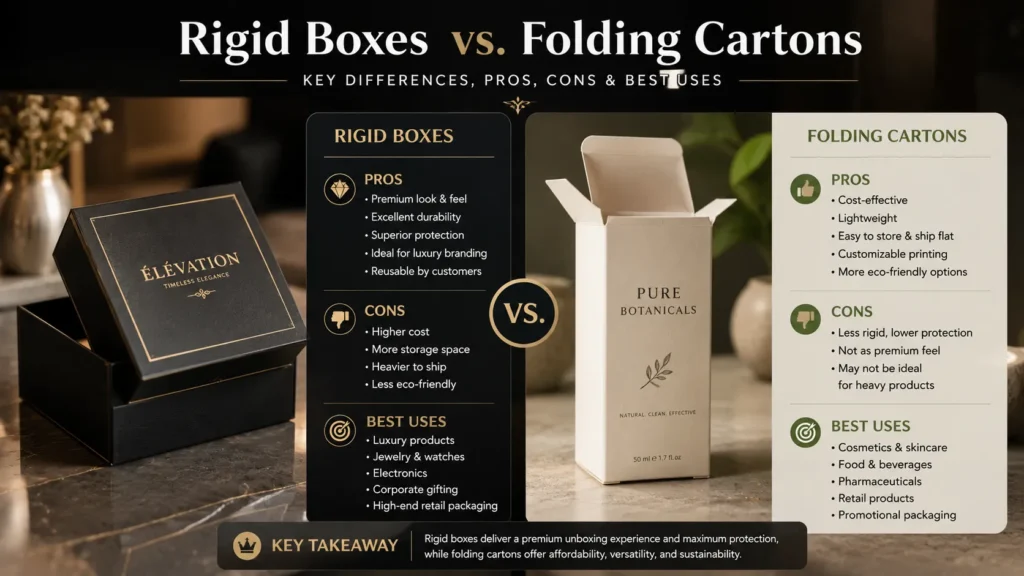
Rigid boxes are durable, heavy-duty packaging containers built for maximum protection. A high-density chipboard is used to manufacture these boxes. They have a double-wall construction. This is the reason, the products inside these boxes remain pristine even after transit shocks or if a box is dropped. Their exterior is wrapped in decorative textured or specialty papers that give them a luxurious look. Custom Rigid boxes do not fold flat or bend under pressure if stacked. Moreover, they are manufactured, assembled, and shipped in their actual 3D shape. That’s why they are also known as set-up boxes.
Due to their elegant appearance, they are the gold standard of luxury branding and are used to display and promote a variety of high-end products on a retail shelf. Like luxury watches, jewelry, perfumes, designer bags and apparel.
Pros & Cons of Using Rigid Boxes
Choosing rigid packaging brings a powerful suite of benefits that standard or stock boxes simply cannot replicate. Some of the perks that you can enjoy are:
- High customer retention rate because rigid boxes are reusable. The premium branding on them keeps reminding of your brand and drives repeat purchase.
- Offer maximum protection and prevent the crushing of fragile items.
- Support the addition of tactile enhancements like embossing artwork and finishing it with metallic accents. This adds luxury to the packaging and justify the premium price point.
- Zero efforts for assembly that can save your team massive fulfillment labor time.
However, rigid boxes have a high manufacturing cost and since they are not flat shipped that’s why their shipping costs are quite high.
What are Folding Cartons?
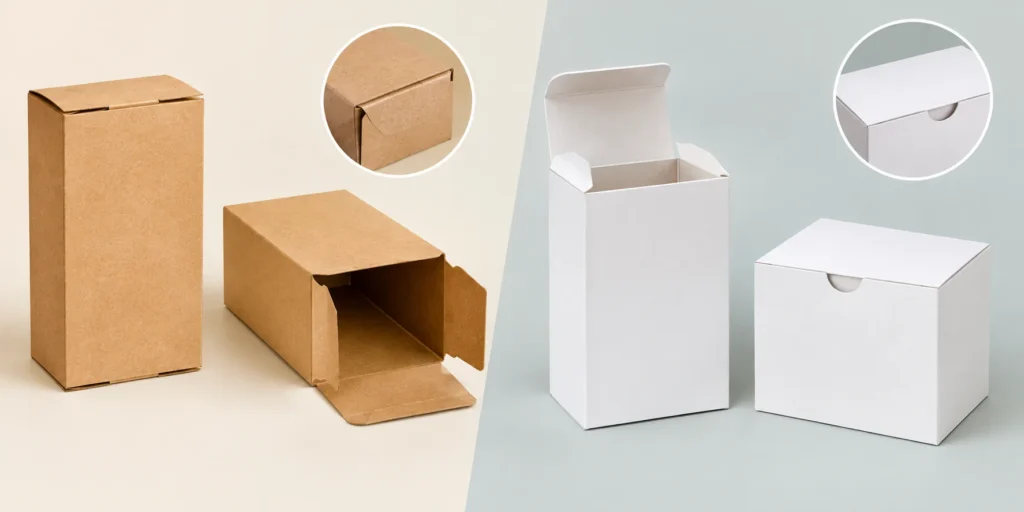
Unlike rigid boxes, folding cartons are lightweight packaging boxes. The material used to craft them is a flexible paper sheet of SBS or Kraft paperboard. These are single-wall packaging containers and feature tuck-in flaps at the top and bottom. These interlocking flaps create a tight seal that eliminates the need for plastic tape or glue. Inside these boxes are product-sized inserts made that keep the items in place during place. Folding cartons are manufactured and flat shipped. Plus, they can be quickly assembled.
In terms of style brands can customize them in four unique designs. Straight tuck boxes, reverse tuck boxes, 1-2-3 bottom boxes, and auto-lock boxes. Folding cartons are the workhorse of the retail world and are suitable for packing grocery items, cosmetics, medicines, and supplements.
Pros & Cons of Folding Cartons
There is a distinct reason why the businesses choose folding cartons over unique geometric boxes or any other structural styles. Folding cartons deliver stunning shelf presence. Some other benefits are:
- Low manufacturing cost that allows printing of vibrant graphics, colors, and luxury finishes.
- Stored and shipped flat that saves a massive amount of warehouse space and reduces shipping charges.
- Eco-friendly and can easily be recycled without contaminating the recycling streamlines.
- Highly versatile and suitable for a variety of small, medium, and large-sized products.
However, folding cartons have limited structural strength that leads to packaging’s crushing under pressure.
Key Difference Between Rigid Boxes vs Folding Cartons
Sometimes deciding between luxury rigid boxes vs paperboard cartons becomes tricky. Because both have similar visuals, made from the same material, and tick all the sustainability boxes. Therefore, it sometimes gets hard to choose between the two. Here are the differences between rigid boxes vs folding cartons that help you make the right call.
Material Thickness & Strength
Although both the boxes are made from eco-friendly Kraft or SBS paperboards, they vary in material thickness and strength. Rigid boxes are engineered from 36pt to120pt chipboard whereas the paper thickness of folding cartons is 10pt to 24pt. Therefore, rigid is the best packaging for premium products and fragile goods.
Unboxing Experience & Perceived Value
Folding cartons are boring. They simply have tuck-in flaps that offer no excitement while opening the box. Whereas rigid boxes can be customized with magnetic closures, tray & sleeves, ribbon ties, and lift-off-lids. These unique opening mechanisms make unboxing a joyful moment for the customers and validate high price tags. That’s why they drive more sales.
Shipping & Storage Cost
Since rigid boxes are pre-assembled boxes, they cost a fortune when it comes to shipping and storage. On the other hand, folding cartons are scored and flat-packed. This means you can fit tens of thousands of units on a single warehouse pallet and save bulk on your freight charges.
So, before we decide who wins the comparison race of rigid boxes vs folding cartons, let’s summarize this custom packaging comparison guide in a table matrix for better understanding.
Features | Rigid Boxes | Folding Cartons |
Materials & Strength | Thick, 36pt to 120pt Chipboard | Thin Paperboard of thickness 10pt to 24pt |
Logistics & Storage | Pre-assembled boxes, high warehouse footprint | Ship and Stored 100% flat. |
Costs & MOQs | High per unit cost, high MOQ | Cost-effective, low MOQ |
Unboxing Experience | Premium, luxury feel. | Functional, retail look |
Best Use | Luxury electronics, smartphones, perfumes, jewelry, watches, and apparel | Cosmetics, skincare, food, snack, medicine, and retail products. |
In short, both wins. So, it’s better to make your decision based on the actual product packaging needs and get consultation from a reliable packaging manufacturer, like Boxit Packages. We understand all the market trends and product requirements and can guide you accordingly. Our consultation is free.
Conclusion
Both rigid boxes and folding cartons have their own strengths and weaknesses. If the first one is the epitome of luxury elite and brand prestige, then folding cartons are the undisputed workhorse of flexibility, sustainability, and cost efficiency. So, go for rigid in your product demands luxury and choose folding if you want to balance functionality with cost.
Need custom printed boxes?
Contact us

.jpg)