

On this page
Have you ever wondered why the world’s most iconic brands like Capri Sun and Kraft Heinz are ditching ‘the box’ for the pouch? Because with the box you have to pay the high shipping cost, there is a risk of broken glass, and wasted warehouse space. On the contrary, pouch packaging is a strategic logistical move that slashes overhead while maximizing shelf appeal. Therefore, from organic baby food to high-end laundry detergents it has become the gold standard of the retail industry.
So, whether you are a startup choosing your first packaging container or an established brand looking to optimize your supply chain, read this blog to explore every technical detail of pouch packaging and make a switch.
The rise of the pouch packaging
Traditional packaging containers such as mason jars, cans, and boxes were heavy to ship. They take up a lot of space resulting in increased shipping cost and are prone to breakage. To resolve these problems Louis Doyen, an employee in a French company introduced flexible pouches. These pouches protect the product while shedding the unnecessary weight,
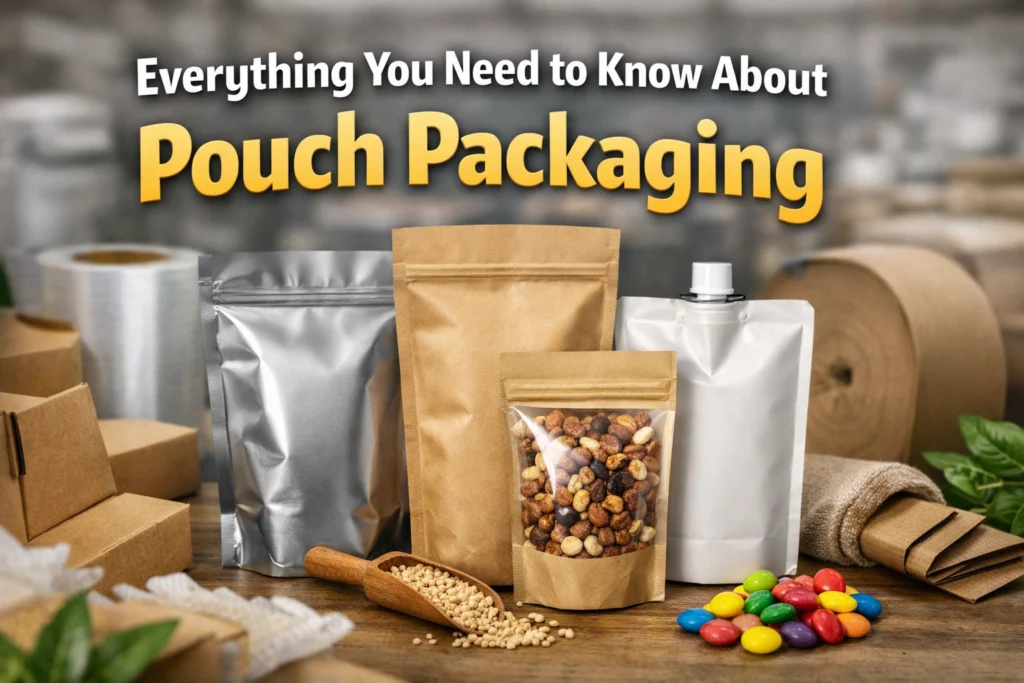
At its core, pouch packaging is a type of flexible bag made from high-quality plastic films, aluminum foil, or specialized paper. It is a laminated bag that can stand upright or lay flat. Its multi-layered structure makes it a barrier against moisture, oxygen, and UV light. Thus, these bags can safely preserve the freshness of many products like fruits, spices, juices, sauces, baby food, and household cleaning agents. These pouches have the ability to change shape that’s why you can design them for liquids, powders, and solids alike.
What are these pouches made of?
Visually these bags might feel like a single piece of plastic but actually they are constructed using multi-layer lamination technique. The first layer is the “Outer layer” and known as the face of the food pouch packaging. This layer is made of PET or BOPP plastic and built for aesthetics and durability. A distinctive feature of the outer layer is its high gloss or matte finish that protects the pouch from external scuffs and puncture.
Next is the “Middle layer” that acts as the shield and known as the barrier layer. It is made of high-barrier materials like Met PET or aluminum foil to prevent air, moisture, and UV light from entering and extending product’s shelf life. The last layer is the “Inner layer” made of LLDPE. When heat is applied by packaging machinery, this layer fuses together to create an airtight, leak-proof seal.
Although these pouch bags have made food storing easier, they come with an environmental risk. They are difficult to recycle because it is hard to separate their multi plastic layers. Therefore, brands looking for a green solution can opt for compostable pouches. These pouches are made from plant- based resins such as PLA or cellulose derived from renewable resources like sugarcane or corn starch.
Essential features of pouch packaging for consumer convenience
The true power of this protector pouch lies in its “user-centric” design. By incorporating specific mechanical features, brands turn a basic vessel into a practical utility for the user. Let’s find out what these features are:
- Resealable seal: The reason behind the pouch bag popularity is it allows for repeated use over a longer period. This is because it comes with a press-to-close-zipper airtight seal. Just open the bag, take your desired portion out and close it again. There is a 0% chance of microbe contamination.
- Portability: The biggest problem of consumers is to carry heavy weight items with spilling. And pouch packaging is best known for its easy-to-carry, portable design. These bags are designed with die-cut handles that offer a secure and comfortable carrying experience for heavier items.
- Transparency: For modern shoppers visual validation is important before buying any product. Therefore, pouch packaging offers a room for a window. This allows brands to showcase the texture, color, and quality of the product inside.
Common types of pouch packaging
Not all pouches are created equal. Some are tall, some are wide, and some are designed with a unique shape while some come with reinforced features. Therefore, before you pick a certain pouch make sure it is the right one for your product and the retail shelf. If you have zero knowledge about it then here are the four most common types of pouch that you can choose from.
Stand-up Pouches
Stand-out pouches are the gold standard of the retail industry and are found in every grocery store or super market. They are designed with a bottom gusset, resealable zippers and tear notches. Since they stand tall they provide a large, flat surface area for branding.
Flat Pouches
You can call these bag sachet or pillow pouches, too. They lie flat and are sealed on three or four sides. They are mostly used for ‘Trail size’ products or items meant for a single use that’s why they are cost-effective and can be produced at extremely high speed.
Spouted Pouches
This is an upgraded version of stand-up pouches and are designed with choke-proof caps or a plastic nozzle into the top or side. They are a lightweight, shatterproof alternative to rigid plastic bottles or glass jars and offer a controlled pour and are easy to re-seal.
Side-gusseted bags
Usually all pouches have a gusseted bottom but these bags come with gussets on both sides. So that when the bag is filled it does not break or leak. These bags are engineered for maximum storage in narrow, compact settings.
Now the question is what comes in a pouch packaging. Well you can pack a wide range of products in these bags. Like Baby food, Pet food, Snacks, coffee, Granola, Spices, Dried fruits, Sauces, Detergents, and Single serving seasoning.
Why choose pouch packaging over traditional boxes?
The shift towards these amazing bags is because they offer benefits that traditional boxes can’t compare to. Such as:
- Cost-effectiveness: The very first benefit is cost-efficiency. Custom pouches use less material than most box packaging options. Moreover, they are lightweight and it is cheaper to ship and store them flat in a warehouse.
- Branding real estate: Pouch packaging offers a unique “360-degree” canvas for branding which is hard to find in a rigid box. It allows for vibrant, photo-realistic graphics that cover the entire surface of the bag.
- Extend shelf life: Most food items are perishable and rapidly deteriorate on a retail shelf. Since these bags are made from high-barrier films, they create an airtight environment that blocks out oxygen, moisture, and UV light. Thus the product inside the bag stays fresh and potent for longer periods and you do not need heavy preservatives.
- Sustainability: These bags use 60% less plastic than a standard rigid bottle. Therefore, they help brands to minimize their total material output from the start.
So if you want to switch to pouch bags and are looking for a reliable custom packaging boxes supplier then your search ends here. Boxit Packages can help you in making the transition to flexible packaging at affordable rates. For further details contact with us.
The final fold
The shift towards pouch packaging is not a trend but its a logistical strategy to enhance the product protection and shipping at cost-effective rates. Moreover, their versatility makes them the best possible solution for every challenge. So it’s time to evaluate your product’s needs, choose the right design, and seal the deal on a more efficient future.
Need custom printed boxes?
Contact us
.jpg)