What Is Washi Tape? Uses, Types, and Key Benefits
Recent Posts
-
 Why Choose Matte or Satin... September 14, 2026
 -
 What Makes Electronics Packaging Effective... September 11, 2026
 -
 What Makes Vape Packaging Boxes... September 7, 2026
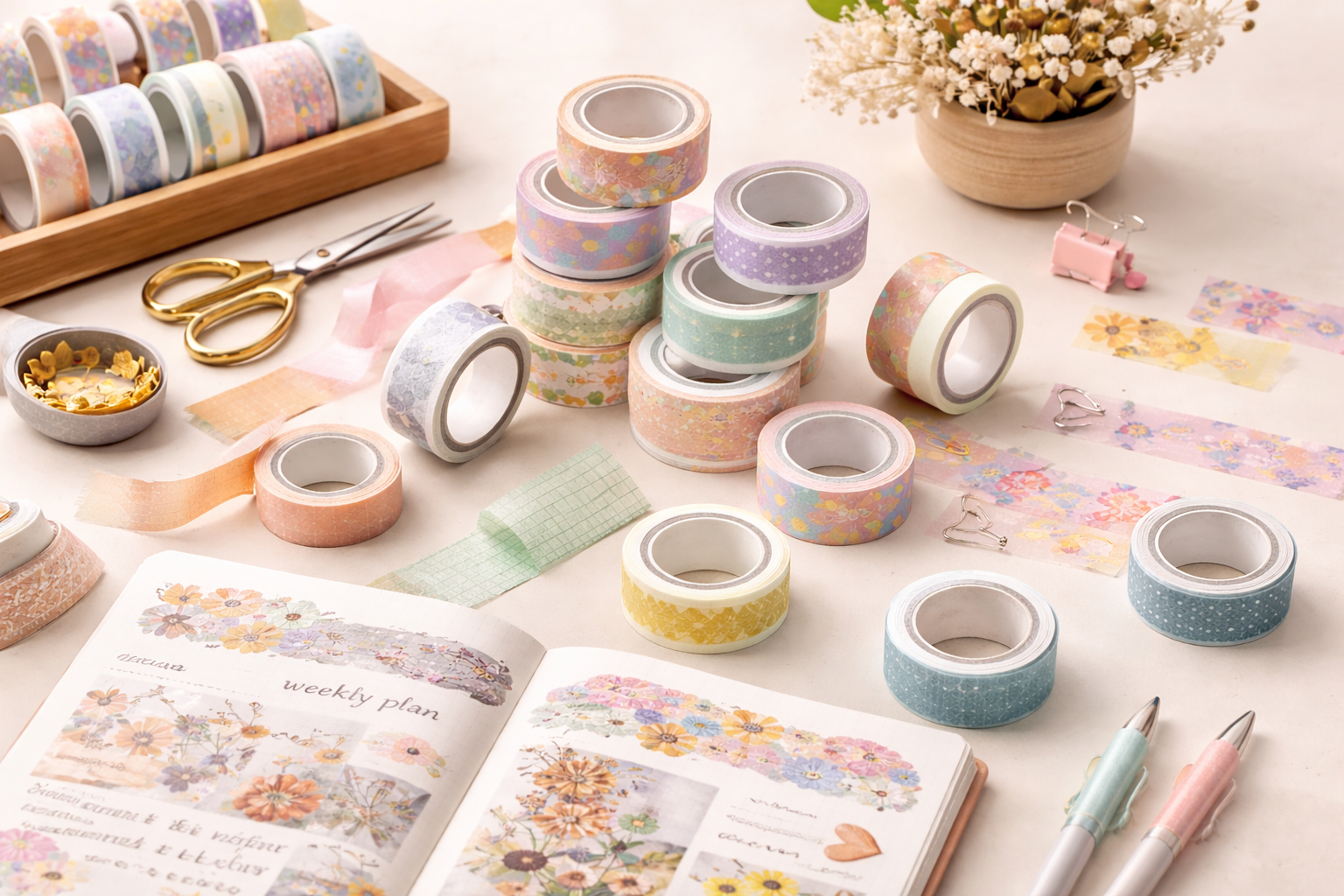
Move over, duct tape; there’s a new adhesive in town that’s just as versatile but infinitely more beautiful. We are talking about Washi Tape. This tape is called a ‘Curio’. It is a functional tool, a decorative accessory, and a highly collectible hobby all at once. You can use it for home styling, identifying kitchen items, and organizing your daily routine. This tape will not leave a single sticky mark behind. Moreover, Washi tapes are biodegradable and come in a variety of patterns and designs. So whether you are a pro-planner or a home decor novice, they are the eco-friendly and damage-free tool your creative kit has been missing.
Read this blog to explore the fascinating origin of washi tape, its different types available on the market and how you can use it in your home and offices.
What is a Washi Tape?
Originating from Japan, the word “Washi” comes from ‘Wa’ meaning Japanese and ‘Shi’ meaning paper. Stepping away from the industrial feel of plastic-based tapes, washi offers an eco-friendly alternative crafted from the sturdy fibers of mitsumata plant and gampi bark. . Therefore, it offers a tactile, weave-like surface that is durable yet thin enough to filter light. Originally it was used in traditional arts such as origami and calligraphy but its remarkable durability and versatility transformed it into a fundamental material in Japanese culture.
There is an often most commonly asked question: is washi tape removable? So the answer is yes. Unlike traditional tapes that offer a ‘one-and-done’ stick, washi tape is incredibly forgiving. It has a low-tack grip which makes it ‘sticky’ in all the right ways and ‘removable’ in all the best ways. The best feature of washi is it’s inexpensive and comes in hundreds of colors and patterns. You can use it on many surfaces such as wood, plastic, metal, and paper. In short, regular tape holds things together but washi sets your creativity apart. So why settle for functional when you can have beautiful?
Types of Washi Tape You Need in Your Collection
The washi tape aisle is a treasure trove of colors and designs, making it hard to settle on a favorite. With thousands of designs out in the market, choosing the right one can be a bit of a rabbit hole. Because not all washi tapes are created equal. So here is a list of four main categories of washi packaging tape and their application.
Basic Patterns and Solids
These are thin and slim tapes and are known as the ‘workhorse’ of the washi world. They come in a vibrant mix of patterns such as stripes, polka dots, floral, and kaleidoscopic geometric. They are perfect for color-coding, segmenting information, framing layouts, and a muted base for more complex compositions.
Specialty Finish Tapes
If you want to add sparkle to your project and make it pop then specialty tapes can give an extra ‘wow’ to your work. These personalized deco washi tape move beyond simple patterns and blend tactile finishes with artistic flourishes to create a one-of-a-kind visual impact. Such as:
- Metallic foiling for shine
- Phosphorescent ink for glow-in-the-dark
- Glitter for shimmer and texture
However, it is important to note that these tapes are slightly thicker than the standard ones so give them a firm rub with your fingernail once applied to ensure it stays flat.
This may not considered as a type but washi washi paper and stickers are available in various dimensions and size:
Skinny Washi Tape: This is a narrow-sized tape that measures from 3mm to 5mm. It is perfect for borders, detailing, and labeling.
Standard Washi Tape: This is the most commonly used size measuring 10mm to 15mm. You can use it in your DIY projects and scrapbooking.
Wide Washi Tape: These tapes measure 20mm+ and go up to 295mm. They are often used for covering entire surfaces such as journals or wall decor.
Creative & Functional Ways to Use Washi Tape in Your Daily Life
Washi tape is a household essential, perfect for everything from kitchen labeling to renter-friendly wall art. Here are some ways you can use it in your home.
Stationery & Planning
For the paper lovers, washi tapes are a total game-changer. Since they come in numerous colors and patterns, you can use it to color-code your calendar. For example, you can assign specific patterns or colors of washi tapes for daily tasks, fitness, and work. In this way you can see your schedule at a glance and manage it accordingly.
It’s also perfect for customizing envelopes with a unique flair. You can use heart-patterned tape on the special Valentine or Wedding invitation. It will give a personalized touch with a feeling of thoughtfulness.
If you’re a journaler, use this Japanese tape to create movable, hinged, or tipped-in elements.
Home Decor (The Renter’s Secret)
Owning a home in the US is challenging due to high costs and interest rates. That’s why most apartments and houses are rented. Living in a rented home has one major drawback. You cannot make changes, damage the property, and sometimes cannot put a nail in the wall. However, with washi tapes you can still make your home look beautiful. Because they peel off without a trace making them an ultimate tool for temporary decor.
Now it’s time to ditch your boring heavy aluminum alloy or plastic photo frames. Create temporary frames or intricate lines of art with washi that gives your home a custom-designed look with zero tools and zero mess.
Does your furniture make the room feel flat? Breathe a new life into old furniture by running a strip of patterned washi along tired bookshelf edges or desk drawer. This is the fastest way to inject personality to your old furniture with the mess of paint and glue.
Organizing & Labeling
Stop fighting over the pencils, books, and charger and finish the “it’s mine” argument once and for all. Wrap a unique strip of tape around your pencils, chargers and cables to easily identify them.
In the kitchen, this Japanese tape is great for labeling spices and bulk grains. Seal and label jars with paper tape so you can identify easily and do not have to go through the whole pantry.
Gift Wrapping
Give your loved ones a gift that they remember for a long time. If you are out of ideas on how to make simple brown paper wrap into an enticing one. Then use a wide washi tape as a “faux ribbon” around a brown paper package for a rustic, premium look. It’s a simple switch that makes even a basic gift feel thoughtfully curated and high-end.
Why Washi Tape is the Ultimate Crafting Game-Changer
Beyond the beautiful patterns and colors of washi tapes, there is a list of practical perks that make them the best of the best of the crafting world.
Damage-Free: It’s low-tack, meaning it won’t peel paint or tear paper (perfect for renters!).
Easy to Use: No scissors required, you can tear it with your hand.
Eco-Friendly: It is biodegradable and made from renewable resources such as bamboo, hemp, and mulberry bark.
Versatility: You can use it on different surfaces like glass, wood, plastic.
Conclusion
Washi tape has traveled from its artisanal Japanese roots to become the unrivaled champion of the modern home, proving it’s far more than just a passing trend. Its durability, eco-friendliness, and damage-free properties make it a hidden gem in a world of permanent, plastic-based office supplies. So if you’re organizing your kitchen, ‘framing’ photos, or elevating your gift-wrapping game, simply go for washi tapes. Because it’s time to ditch the sticky residue of the past that increases plastic pollution and embrace the colorful, repositionable future of washi.
.jpg)