SBS vs. CCNB Paperboard: Which Material Is Better for Packaging?
Recent Posts
-
 How to Create Better Product... September 2, 2026
 -
 How Retail Packaging Shapes the... August 31, 2026
 -
 Why the Right Pizza Packaging... August 28, 2026
Designing a custom box is way more difficult than actually making the product. You have to be careful about the packaging’s dimension, visual appeal, and most importantly the material type. Because if you pick the wrong substrate, it can bleed your budget dry and result in flimsy boxes that may collapse on a retail shelf. So, what is the most suitable packing material? Well, in the packaging world, two materials rule the retail shelves. One is a pristine, bright white canvas known as “SBS paperboard”. Another is the “CCNB paper board”, the king of recycled value. One promises high-end luxury appeal whereas the other delivers budget-friendly practicality. So which one to go with?
To pick the right one, read this blog. We will make a detailed comparison of SBS vs CCNB paperboard. We will examine their print quality, durability, and cost so you can protect your product and margin.
What is SBS Paperboard?
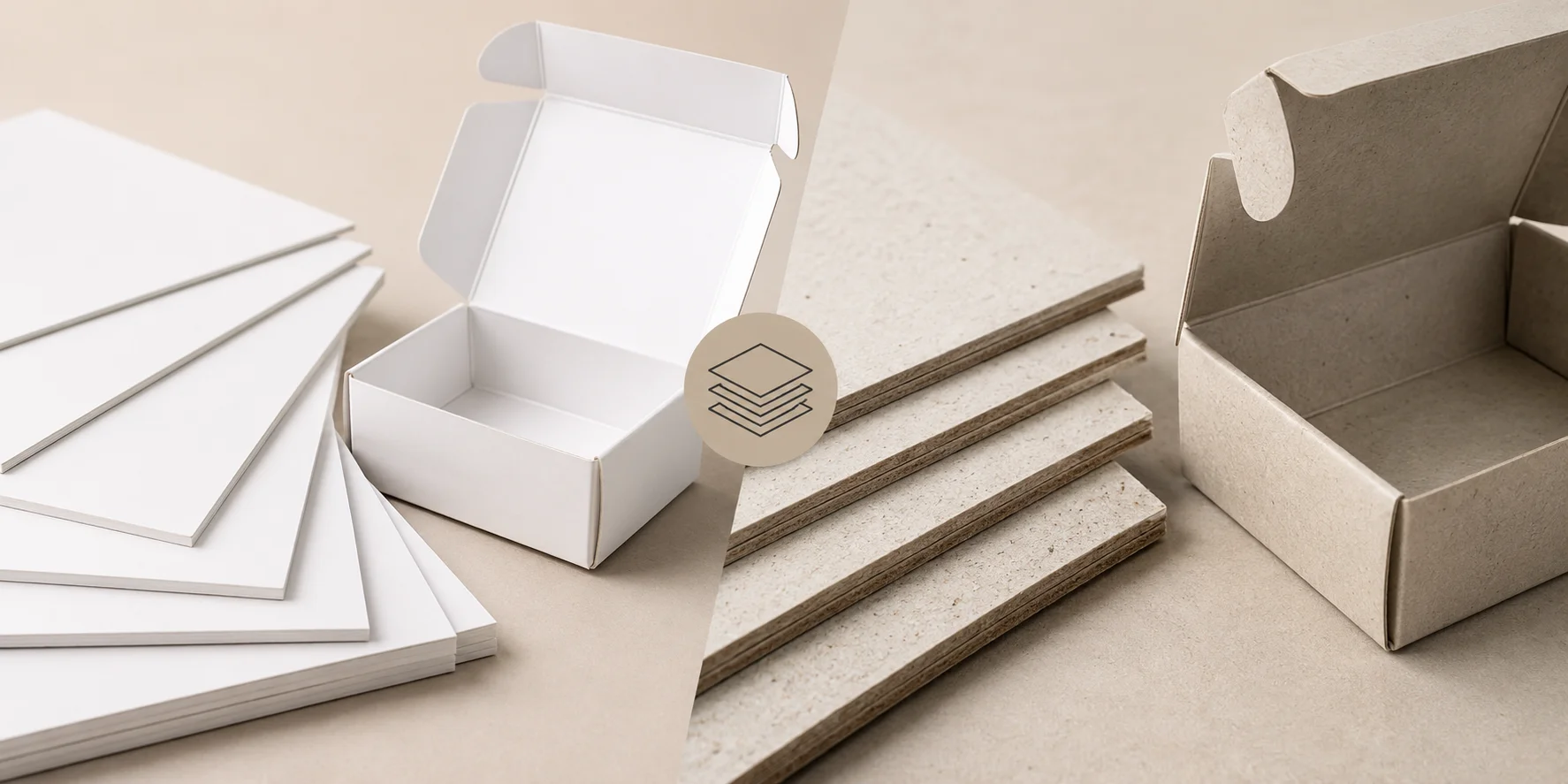
Solid Bleached Sulfate also known as SBS is a high-density, premium quality paperboard. It is a 100% pure material manufactured from bleached virgin wood pulp. That’s why it sports a flawless white finish, front and back. This substrate is coated with a thin layer of clay, making it incredibly smooth. It can handle high-definition printing techniques and has great absorbency for soy, water, and UV inks. Since SBS paperboard is made by chemically treating the softwood and hardwood fibers, therefore, it is sturdy and rigid than any recycled cardstock.
Due to SBS high-end visuals, it is quite popular in the retail sector. Brands who refuse to compromise on structural integrity and visual perfection can use SBS paper board to craft unique styles of boxes. Like folding cartons, sleeve-and-tray, and magnetic boxes. It is perfect for packing cosmetic, skincare, confectionery, and luxury gift items.
What is a CCNB Paperboard?
The full form of CCNB paperboard is Clay Coated News Back. Alternately, it is also known by the names duplex board or greyback board. This paperboard is manufactured using recycled paper waste. Like old magazines, used corrugated containers, and recycled newsprints. That’s why it has a slightly bleached recycled fibrous surface. To make CCNB paperboard printable, its top layer is coated with thin kaolin clay. Whereas, its back remains unfinished. Since the CCNB possess recycled fibers therefore, it offers low structural strength.
CCNB paperboard is suitable for lightweight products. You can use it to manufacture packaging of dry foods, cereal, tissue, toys, and automotive items.
Head-to-Head Comparison of SBS vs CCNB Paperboard
Both the materials are the workhorse of their domain. If one is the powerhouse for visual appeal then the other is the gold standard for sustainability. So, there is no universal winner. To choose from SBS vs CCNB paperboard for packaging, let’s look past the acronyms and how they perform in terms of aesthetics, durability, sustainability, and cost.
Aesthetic & Print Quality
On a retail shelf the texture, brightness, and color of your material do most of the talking. Meaning the visual profile of your packaging decides how much your product’s worth is and how to grab customer attention. When it comes to visual presentation, the two materials are completely different. SBS paperboard has a flawless, ultra-bright surface. It incredibly absorbs inks without bleeding or fading and makes every branding element (logo, colors, and text) pop. Its surface also supports decorative printing. For example, you can emboss your intricate pattern or add metallic foils to the logo. It will give your product a rich, opulent look and feel while making unboxing a joyful moment.
CCNB paperboard on the other hand has a rugged split personality. Its top has a good printable quality due white clay coating but the back or interior is grey or light brown. Therefore, upon unboxing it lowers the premium value of the product.
Structural Strength & Durability
The aesthetics of the packaging is just a half part, you need to deliver the product safely to the customer’s home. So the question is which material can hold its shape during rough transit and shelf stacking. Here once again, SBS paperboard gets the winning point. Since it is made from 100% virgin wood pulp, its cellulose fibers are dense and strong. Therefore, the boxes made from this material have great tear, puncture, and crush resistance. On the contrary, CCNB paperboard consists of recycled fibers. They have a lower tensile strength and rigidity due to their multiple use.
Sustainability & Eco-Friendliness
You ensured a secured delivery and a premium unboxing experience. But is your packaging sustainably sourced? What efforts did you make to reduce your carbon footprint? Responsible sourcing of the packaging is very important as it helps in building green market image and grabbing eco-consumers attention. In this case, CCBN paperboard takes the lead. Since it is made of 100% recycled papers, brands can boast 100% recycled and win a massive selling point.
Cost & Budget Implications
Cost is the deciding factor for many brands when it comes to the material choice. SBS paperboard is manufactured through intensive chemical and bleaching processes. That’s why it is expensive and comes with a high price tag. However, CCNB paperboard is cost-effective and an undisputed king of high-volume orders.
After all the above premium packaging material comparison, let’s summarize the data in a table for a quick review.
| Features | SBS Paperboard | CCNB Paperboard |
|---|---|---|
| Material Source | 100% Virgin Wood Pulp | Recycled Newspaper |
| Interior Color | Clean White | Grey or Light Brown |
| Print Surface | Ultra-Smooth | Clay-Coated Front |
| Durability | High | Moderate |
| Cost | Premium, High Cost | Economical, Budget-Friendly |
| Eco-Narrative | Recyclable | 100% Recycled Content |
Choosing Between SBS vs CCNB Paperboard
There is no final verdict for the best paperboard material for packaging, because it’s a tie between the two. If one wins for its rich, luxurious appeal and high strength. Then the other has the edge based on sustainability and cost. Therefore, when it comes to picking the right paperboard, the decision should be made based on your product requirement and budget constraints. But to make the definitive call, you can stick with the following rules:
Pick SBS Paperboard If:
- You are selling high-end luxurious products that demand a higher price point.
- Your products are fragile and need a packaging that is able to withstand shelf stacking and rough transit.
- You want double-side printing for a premium unboxing experience.
Pick CCNB Paperboard If:
- You are tight on budget and exterior branding is enough for product promotion.
- You need to place high-volume orders as CCNB can save a huge cost.
- Your brands need to build a 100% green market image to grab eco-conscious customer attention.
Conclusion
With all the above discussion, one thing is clear. Don’t stress out when it comes to choosing between SBS vs CCNB paperboard. Just look at what your product needs and how much is your budget. If you deal in luxury goods then pick an SBS paperboard. But if your items are lightweight and you need a budget-friendly rate, go for CCNB paperboard. However, if you still don’t get it, discuss the options with your packaging manufacturer. Pick a reliable supplier like Boxit Packages. We offer a variety of material options. We even provide free samples and 3D mockups, so that brands can check the packaging’s quality before placing bulk orders. Contact us today, to explore our material collection.
.jpg)