What Are Standard Shipping Box Dimensions, Sizes And Their Uses?
Recent Posts
-
 Why Choose Matte or Satin... September 14, 2026
 -
 What Makes Electronics Packaging Effective... September 11, 2026
 -
 What Makes Vape Packaging Boxes... September 7, 2026
Before you reach for the packing tape, you need to know if you’re reaching for the right box. Because in the world of logistics “Size matters”. Using an oversized box is a twofold profit killer. It wastes materials and triggers hefty surcharges. Conversely, squeezing a product into a box causes crushing with possible risks of structural failure. Thus, leaving your items vulnerable to damage and your business prone to headache of returns. Therefore, knowing about standard shipping box sizes and dimensions is important as it can save your product, money, and time.
In the guide, you can find everything you need to know about standard shipping box sizes and what they are actually meant to carry.
Understanding the basics: How boxes are measured
While measuring a box seems simple, a minor calculation error can result in an ill-fitting or unexpected shipping charges. That’s why it is important to know every little detail of a box. It all comes down to three key dimensions: Length, Width, and Height. These dimensions are a gold standard for efficient packaging. In the shipping industry, these dimensions are universally listed as:
Length (L) x Width (W) x Height
- Length is the longest side of the opening of the box.
- Width is the shorter side of the opening.
- Height is the distance from top of the opening to the bottom of the box.
Internal vs. external dimensions
This is where many shippers go wrong. Packaging manufacturers use internal dimensions to define the usable space, as this ensures your product will fit correctly. However, this is not the case with shipping carriers like UPS and FedEx. They account for external dimensions because the fluting thickness of a cardboard can alter the outer dimensions by 0.5″ or several millimeters. So, next time when you pack your shipment, do review the various FedEx or UPS cardboard box sizes. It will help you to secure the best return on investment for protection.
Common standard shipping box sizes and their best use
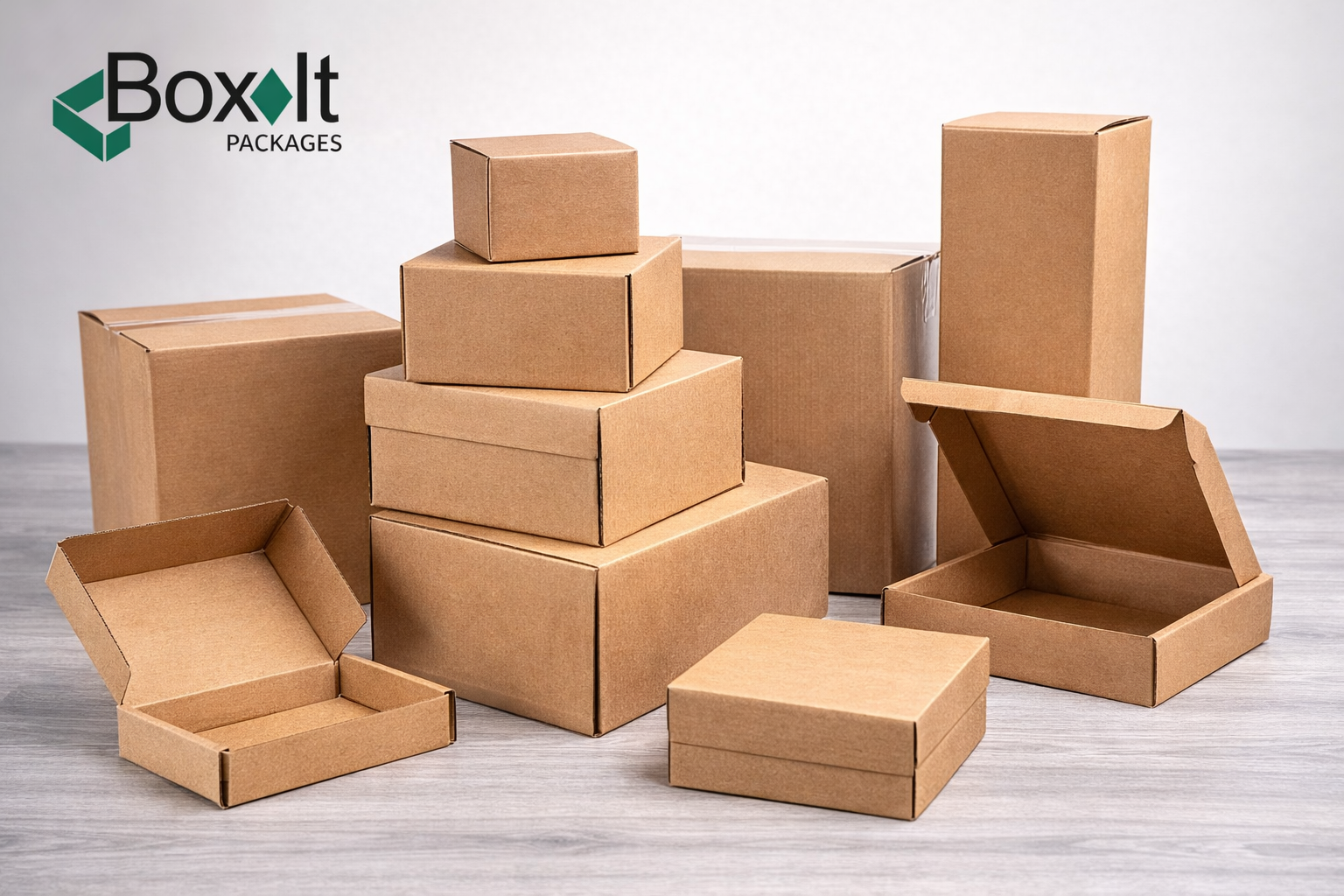
From the small mailer to the extra-large carton, cardboard comes in all shapes and sizes and each box has a specific job to do. Choosing the ‘standard’ based on your guesses can quietly drain your shipping budget. Here is the list of shipping box sizes and dimensions. Take a look and pick the right one for your next consignment.
Small shipping boxes
These are compact-sized boxes made from durable corrugated cardboard. The primary purpose of small shipping boxes is to deliver lightweight or fragile items safely. For example, cosmetic, tech gadgets, glassware, and small household items. Small boxes are available in various sizes and designs, you select the one that sits perfectly with your product dimensions. Here are the small box length width height details.
- 6″ x 4″ x 4″
- 8″ x 6″ x 4″
- 8″ x 8″ x 8″
- 10″ x 10″ x 10″
Medium shipping boxes
Medium-sized containers are one step up from the smaller ones. They are the most coveted, all-purpose, and budget-friendly. These boxes are designed for moderate-weight items and can safely transport kitchen appliances, household goods, clothing, books, auto parts, and electronics. Their standard carton box dimensions are:
- 10″ x 10″ x 10″
- 12″ x 12″ x 6″
- 12″ x 12″ x 12″
- 16″ x 12″ x 12″
Large shipping boxes
These robust corrugated cardboard mailers are used to ship bulky and high-volume items. They are designed as per the product dimensions and customized with special top-loading or side-loading features for ease in packing. You can use mailer shipping boxes to transport large electronic components, narrow items such as golf clubs, lamps, mirrors, artwork, and framed photographs. Here is the standard shipping box sizes:
- 18″ x 18″ x 28″
- 20″ x 20″ x 12″
- 24″ x 18″ x 18″
- 24″ x 24″ x 24″
You can find durable large shipping boxes supplies and other packaging containers at Boxit Packages or online.
Specialized box types you should know
The ‘standard’ box is a jack-of-all-trades, but sometimes a ‘standard’ cube just won’t cut it. If your product is unusually heavy, exceptionally long, or incredibly flat, standard packaging is not suitable. In this case specialized boxes are the best way to safeguard your goods and eliminate costly shipping penalties. You can pick:
Multi-depth boxes
Multi-depth boxes are designed with an innovative structural feature i.e. pre-scored, horizontal creases at regular intervals. These creases allow the user to cut down the height and create a box according to the product requirements. These boxes also save a good amount of money by reducing dimensional weight and eliminating extra fillers. The common sizes of multi-depth mailers are:
- 4″ x4″ x 4″: Suitable for small-sized items.
- 6″ x 6″ x 6″: Designed for medium-sized products.
- 12″ x 12″ x 12″: Can hold bulky goods.
Telescoping boxes
Sometimes a product is long, bulky, and differs from typical rectangular, square, or circular shapes. For this irregular item, you can use adaptable telescoping boxes. These boxes come with a base and a lid that slide over each other. So, now you can ship long items like rugs, golf clubs, rolls fabric, or industrial pipes easily. The telescoping shipping boxes dimensions are:
- 4″ x 4″ x 48″
- 10″ x 10″ x 48″
- 24″ x 24″ x 40″
5 Tips for e-commerce packaging
Choosing the right box size is only half the battle. How you fill, seal, and send that box determines whether you’re actually making a profit or not. To be on safer side follow the practical strategies listed below. They will help you tighten your shipping operations and protect your margins.
- Pick your box by following the “Two-Inch Rule”.
- Use the right taping technique. The safest option is the “H-Tape” method.
- Utilize cushion material prudently.
- Label your box correctly for product safety.
- Do conduct a “4-Foot Drop Test” to check if the box can survive the rough transit process.
Conclusion
At the end of the day, a shipping box is more than just a vessel; it’s a promise of quality delivered to your customer’s doorstep. From the compact small mailer to the specialized telescoping box, the perfect fit is out there. So, stop guessing, start measuring and see how much cardboard and cash you can save. If you still have queries regarding standard shipping box sizes you can contact us. Boxit Packages will provide you with the best packaging services.
.jpg)