How to Measure a Small Rectangular Box? How to Do It Like a Pro!
Recent Posts
-
 What Makes Vape Packaging Boxes... September 7, 2026
 -
 How to Create Better Product... September 2, 2026
 -
 How Retail Packaging Shapes the... August 31, 2026
Measuring a rectangular box seems like Grade 1 math. You just need a ruler or an inch tape to measure the length, width, and height. But, this is not as easy as it looks. In the world of packaging and shipping, a single misplaced inch might cost a massive surcharge. Therefore, getting the right dimensions of a small rectangular box shouldn’t be a guessing game. As they come with unique challenges. Such as surface and edge fragility, limited clearance, and overstuffed corners. By exactly measuring the rectangular box dimensions, you can improve packaging efficiency, reduce waste, minimize shipping costs, and ensure safety. So, if you are ready to stop second-guessing your tape measure, then this blog is for you. From measuring the longest side of a small rectangular box to calculating total volume. This guide covers everything you need to know to get the right dimensions on the first try.
Why accurate dimensions of a small rectangular box matter
Accuracy in box dimensions is the only thing standing between a perfectly packed pallet and a logistical nightmare. Therefore, an accurate set of dimensions of custom packaging boxes is the foundation of a seamless supply chain.
Other reasons for the right measurements are:
Robust product protection
A box that is too large isn’t just a waste of space. In fact it’s a collision waiting to happen for the item inside. An exact-fit box prevents items from shifting, reducing damage during transit and ensuring a better unboxing experience.
Storage efficiency
Efficiency is the daughter of accuracy. When you know your dimensions, you can predict your capacity with 100% certainty. Also, the right dimensions are helpful for optimal stacking in warehouses and space utilization.
Reduced shipping cost
Precision is the ultimate discount. The more accurately you measure. The less you pay to shipping carriers.
Understanding the dimensions of small rectangular box
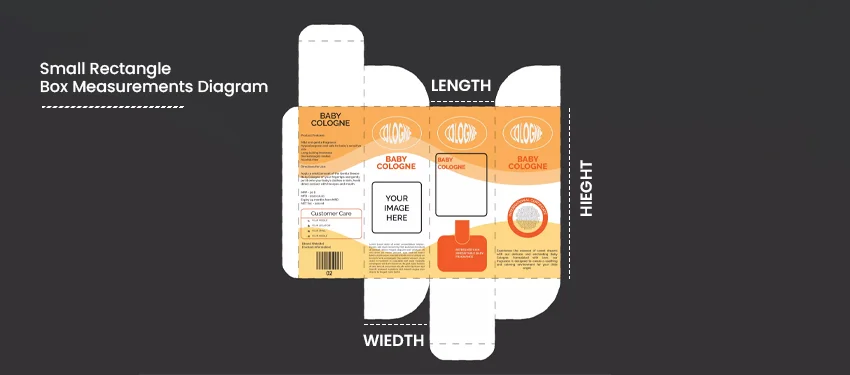
Before measuring the dimensions of small rectangular cardboard boxes. It is important to know the parameters you are going to deal with. There are three parameters Length, Width, and Height. Length is the longest side of a box whereas the width is the vertical length and is smaller than the length. Both the parameters represent the flat area of the box. Height, on the other hand, is the vertical dimension measured from the base to the top of the box. The standard units used for these measurements are centimeters and inches.
By accurately measuring these dimensions, you can determine the dimensional weight of the box and manage the space and cost of shipping.
Master the art of measuring small box dimensions
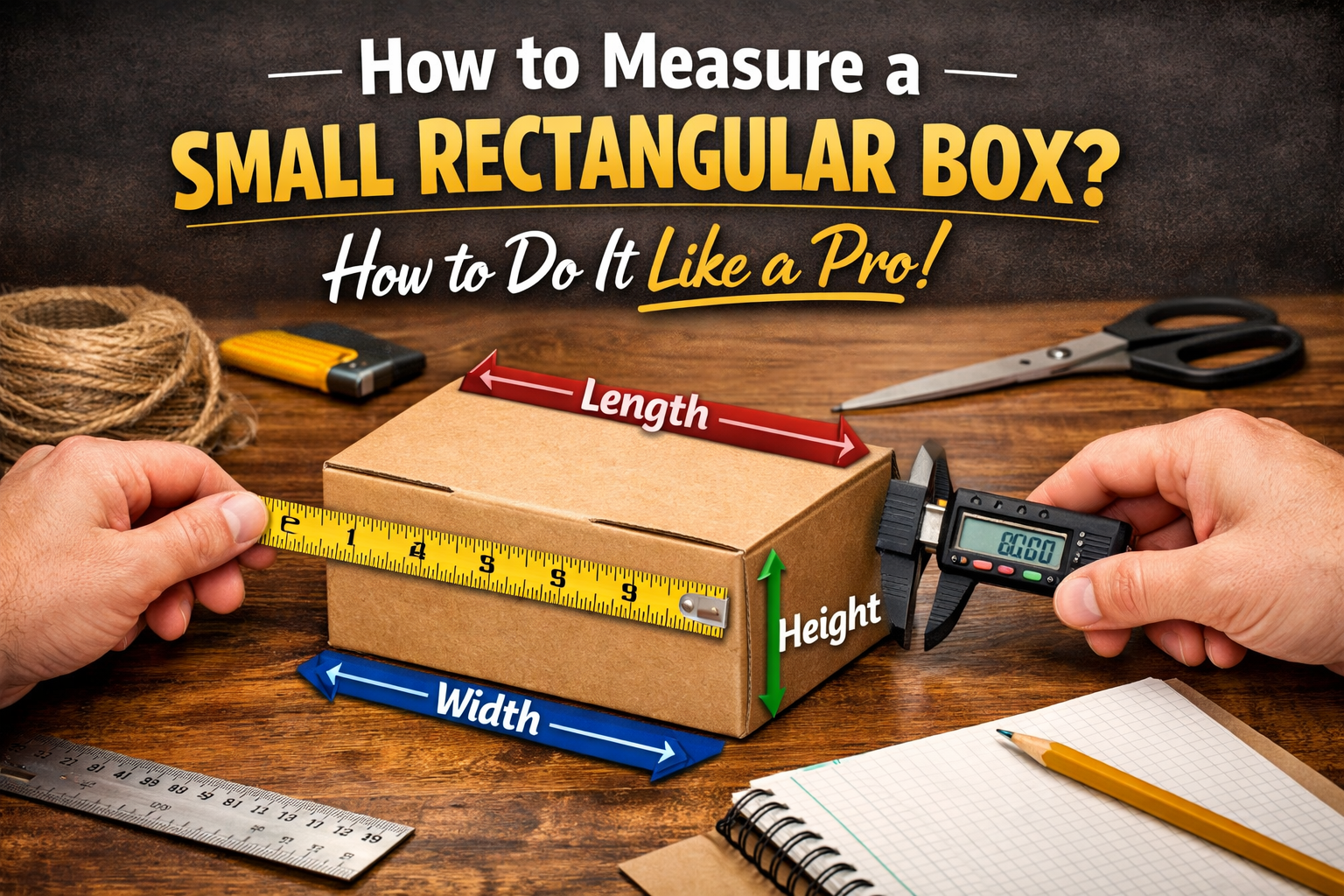
Measuring like a pro starts with a dedicated toolkit. So, clear the clutter from your desk, because you’ll need the following three tools if you want to get your L x W x H perfectly accurate.
- A caliper to measure thickness.
- Rulers to measure length, width, and height separately.
- Flexible measuring tapes to measure the perimeter of the boxes.
Measuring a box may seem simple, but there are small details that make a big difference. Therefore, carry out the following instructions as they are.
- Start by identifying the length of the small rectangular box. It’s the longest side of the box opening.
- Next identify the width. Width is the shorter side of the box and is perpendicular to length.
- Finally, measure the height. Height is the vertical distance from the bottom to the top. In case of hinged lid boxes or magnetic closures, measure with the lid closed.
Always remember to follow this order (L x W x H) and use a small ruler to measure small rectangular gift boxes. For large boxes, measure with the help of yardstick. Also, use internal dimensions when you’re focused on how the product fits inside the box. Use external dimensions when calculating shipping or shelf space. Last but not the least, don’t forget to write the units of the measurements. Length, width, and height are usually measured in inches, cm, or mm.
Decoding internal vs. external dimensions
Understanding the difference between the internal and external dimensions is the first step towards becoming a master of packaging. So, let’s figure this out with the help of an example. Think of your small rectangular box like a house. The external dimensions tell you if it will fit on the lot. Whereas the internal dimensions tell you if your furniture will fit into the rooms. Similar is the case box dimensions. The internal dimensions refer to the usable space inside the box. This is the size that your product and padding must fit into. On the other hand, the outer dimensions include wall/material thickness. This is a full size box.
How to wrap a small rectangular box
Apart from shipping or product protection, many small rectangular cardboard boxes are used for packing gifts. This is where many people struggle to do it right. Because in small boxes, the folds of the wrapping paper often overlap too much. Thus, resulting in bulk packing, uneven corners, and poor presentation. To perfectly wrap your small custom packaging boxes, you need to stop fighting with your scissors and tape. And follow the guidelines mentioned below.
- First place your small box in the center of your wrapping sheet. Place it upside down.
- Next, fold the longer side of the paper up over the box and secure it with a tape. Repeat this step with the other long side, too.
- The third step is called the triangle method. Fold the top flap down to meet the edge of the box. Then fold the side flaps inward to create two triangles against the box. Crease the edges of the triangles and tape it down securely.
- Repeat this triangle method on the other side of the box, too and finish the wrapping with a fancy ribbon, bow or a twine.
Conclusion
Just remember that measuring a small rectangular box needs three things. First the right tool, second the right order, and third the right edges and units. By keeping these things in mind and following the golden L x W x H formula, you can accurate the measure your box size without any hassle. Moreover, for perfect fitting of a product inside the box, develop a better understanding of the internal dimensions.
.jpg)