Plastic Bags vs Paper Bags: Which One Should You Choose?
Recent Posts
-
 How to Use Letter Paper... April 9, 2026
 -
 How to Choose the Right... April 8, 2026
 -
 Everything to Know About Twist... April 7, 2026
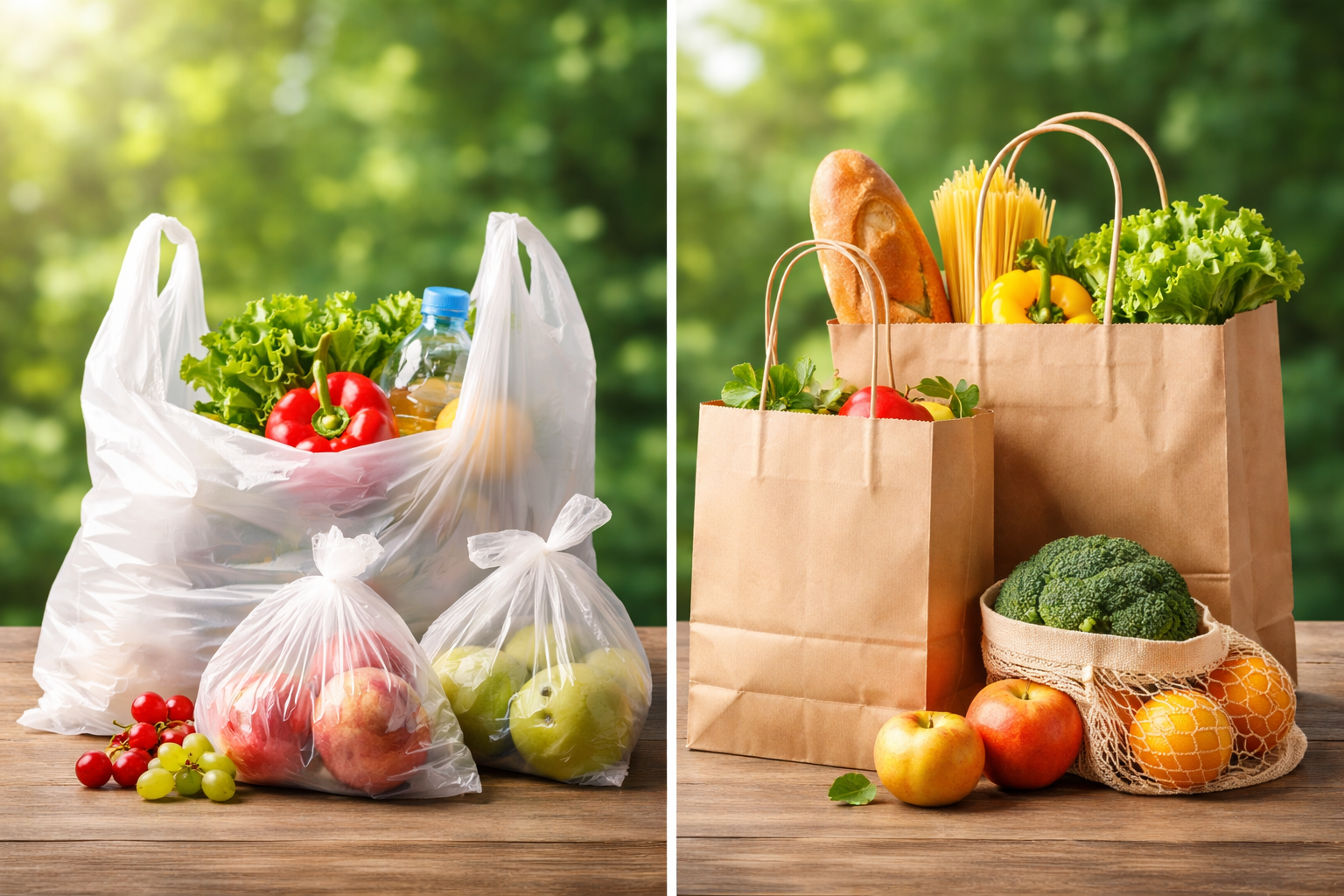
We are often presented with a choice of bagging options when we go to a grocery store or shopping. The moment feels like a test of our character. Because we have to either pick a plastic bag that we know might end up in a landfill for centuries. Or the paper bag that is compostable but often rips before we even get to the car. Making this decision is not that simple as it looks as neither is perfect. Therefore, let’s break down the plastic bags vs paper bags debate to find the best shopping solution.
A Quick Comparison of Plastic Bags vs. Paper Bags
If you want to save the turtles, choose paper bags but if you want to save the money then choose plastic bags. Tough situation, that’s why we said choosing between the two is never as simple as it seems. So let’s begin with the pros and cons of plastic bags vs paper bags to make the right decision but first let’s explore:
What Are Paper Bags?
Paper bags are pre-formed containers made from Kraft and are used for packaging and carrying goods. They come in different sizes, shapes, and styles and are mostly brown and white in color. The brown paper bags use unbleached Kraft and give a rustic look whereas white paper bags are made from bleached Kraft paper bags. They have glossy finish and are used by high-end retail and food brands to make branding pop.
What are Plastic Bags?
Plastic bags also known as poly bags are the staple of modern convenience and are made from either high-density or low-density polyethylene. They are durable, lightweight and can lift heavy loads of heavy retail items. Their common types include t-shirt bags, die-cut bags, and bags-for-life.
The Benefits of Using Paper Bags
If your goal is to reduce litter and eliminate micro plastics from your environment, the choice begins and ends with paper bags. Because not only they are safe for the planet but offer several other benefits. Such as:
Have High Biodegradability Rate
The most significant advantage of paper bags is their natural end-of-life because they are made from organic cellulose fibers of Kraft which make them biodegradable. For instance, if you throw away your bag and it ends up in litter, it will take 2 to 6 weeks to break down depending on moisture and temperature. Some paper bags are compostable too, you can shred and use them as compost for the soil, thus, making the soil enriched with nutrients.
Highly Efficient Recycling Loop
Paper bags are one of the most successfully recycled materials globally. Therefore, its infrastructure is well-established and consumer-friendly. You don’t need a special trip to a grocery store drop-off point, it can go straight into your standard blue recycling bin.
Possess Great Strength & Durability
Paper bags tear apart easily is just a myth. Since they are made from Kraft that’s why they have great tensile strength which makes them tear-resistant. Moreover, they are designed with a flat bottom which makes the bags stand upright. So it is easier to pack them and place them in the car trunk, they won’t tip over.
Offer a Variety of Options for Branding
Paper bags have a smooth surface therefore, you can print them with branding elements to build recognition. By using high-quality digital printing on them your colors will become more vibrant and logos will look sharper. Thus making the bags a walking billboard for a brand’s aesthetic.
The Downside of Paper Bags
Although paper bags win the battle against litter and micro plastics, this win comes at a high cost of deforestation. Moreover, they are not waterproof, take more storage space than plastic bags, and are a little costly. Some other cons of paper bags are:
Have High Energy Consumption
Did you know that it takes four times more energy to manufacture a paper bag than a plastic one? Yes, and this energy compromises of harvesting timber, transporting heavy logs, and the heat-intensive pulping process. This ultimately results in higher carbon emissions.
Non-Reusable and Non-Water-Resistant
A bag’s sustainability is often measured by how many times it can be reused. Paper bags often fail this test. Unlike plastic bags, they lose their structural integrity the moment they get wet because of a leaky milk carton or a light rain shower.
Higher Shipping Cost
Paper bags are the “heavyweight” of the packaging world and brands have to pay a good amount for shipping them. Since they are bulky and heavy, they take up more space and it takes seven times as many trucks to deliver 1,000 paper bags than plastic bags. Thus leading to much higher transport-related carbon emissions and freight cost.
The Benefits of Using Plastic Bags
Now that we know the pros and cons of paper bags, let’s see what benefits plastic bags offer. Although they are seen as the villain of the environment, they have provided some amazing benefits too. Which are:
Unrivaled Production Efficiency
Everyone says that plastic bags are not eco-friendly, well this is half true. Because if we measure eco-friendliness by resources used during the production process. Then plastic bags always win. Manufacturing plastic bags requires about 70% less energy than creating paper bags. They have a lower melting point and their extrusion process is highly streamlined and demands far less fuel.
In a retail setting, plastic bags take up minimal warehouse space and reduce the energy needed for climate control and storage facilities.
The “Hidden” Reusability
The greatest edge of plastic bags over paper bags is their reusability in different ways. For example, the majority of the consumers reuse plastic grocery bags as small trash can liners, lunch bags, or for disposing of pet waste. When a grocery bag is reused as a trash liner, it prevents the consumer from buying a dedicated, thicker plastic trash bag. This effectively “halves” the plastic footprint of that specific task.
Highly Durable and Water-Resistant
Plastic bags are lightweight and durable which makes them an ideal packaging option for lifting bulky retail items. Moreover, they offer a waterproof barrier which makes them essential for protecting goods in the rain or holding leaky liquid containers or bottles.
The Downside of Plastic Bags
The very durability that makes plastic bags useful also makes it one of the most persistent pollutants on the planet. Other than this, there are some more drawbacks of using plastic packaging.
Take Years to Decompose
Unlike paper, non-woven bags and Mylar bags, plastic bags do not “rot” or return to the earth. A standard plastic bag can take anywhere from 500 to 1,000 years to break down. Even then, it never truly disappears.
A Threat to Wildlife
Plastic bags are lightweight and aerodynamic. They can easily escape trash cans and landfills, eventually finding their way into waterways like the sea and oceans. In the ocean, a floating plastic bag looks like a jellyfish which is the primary food source for many sea turtle species. Ingestion of these bags can cause asphyxia and even death of these marine animals.
The Recycling Paradox
Most of the plastic bags are non-recyclable. They can get caught in the rotating gears and sorting belts, thus forcing the entire plant to shut down multiple times a day. As a result workers have to manually cut the plastic out with box cutters.
Now that you have gone through the comparative analysis of plastic bags vs paper bags, it is quite clear why paper bags are better than plastic ones. So make your switch to paper bags and save the planet for our future generations. You can get durable and fully customizable paper bags from Boxit Packages, a prestigious company that offers affordable packaging boxes in US. Contact for more details.
Wrapping it up!
With a detailed analysis of plastic bags vs paper bags, it is clear a paper bag costs more to make, while a plastic bag costs more to throw away. So, which one will you choose? However, if you are still confused about the best choice for the planet, then reach for a reusable bag which can either be plastic or made from paper. If you still think that plastic is better than go for biodegradable plastic bags made from starch, PLA, or other plant-based materials. They are durable, environment friendly but a little costly.
.jpg)
