

On this page
Quick Answer: Cigarette prices across the US in 2026 range from about $6.11 in Missouri to $11.96 in New York per pack, with the national average sitting between $8.00–$10.00. The gap comes down to state excise taxes and Minimum Pricing Laws (MPLs) states like New York, Rhode Island, and Connecticut tax heavily ($10–$12/pack), while Missouri, Georgia, and North Dakota keep taxes low (under $7/pack). A carton (10 packs) now costs $79–$155+ depending on the state.
Do you know you might have to pay $15 for a pack of cigarettes in New York but only $8.50 in Alabama? Ever wonder why one pack is so much cheaper than the other? Well, behind every price tag of a cigarette box is a complex web of state excise taxes, new ‘nicotine parity’ laws, and minimum pricing mandates that vary wildly by zip code. This is the reason your zip code matters more than your brand choice and price varies when it comes to what you’ll pay for a pack of cigarettes. Therefore, this blog is a detailed 2026 guide on the price of a packet of cigarettes in all 50 states. We will discuss the excise tax, what are the pricing laws in the USA, and the names of surprising states where you can still find a pack for under seven dollars.
The economies behind the rise of price of a packet of cigarettes
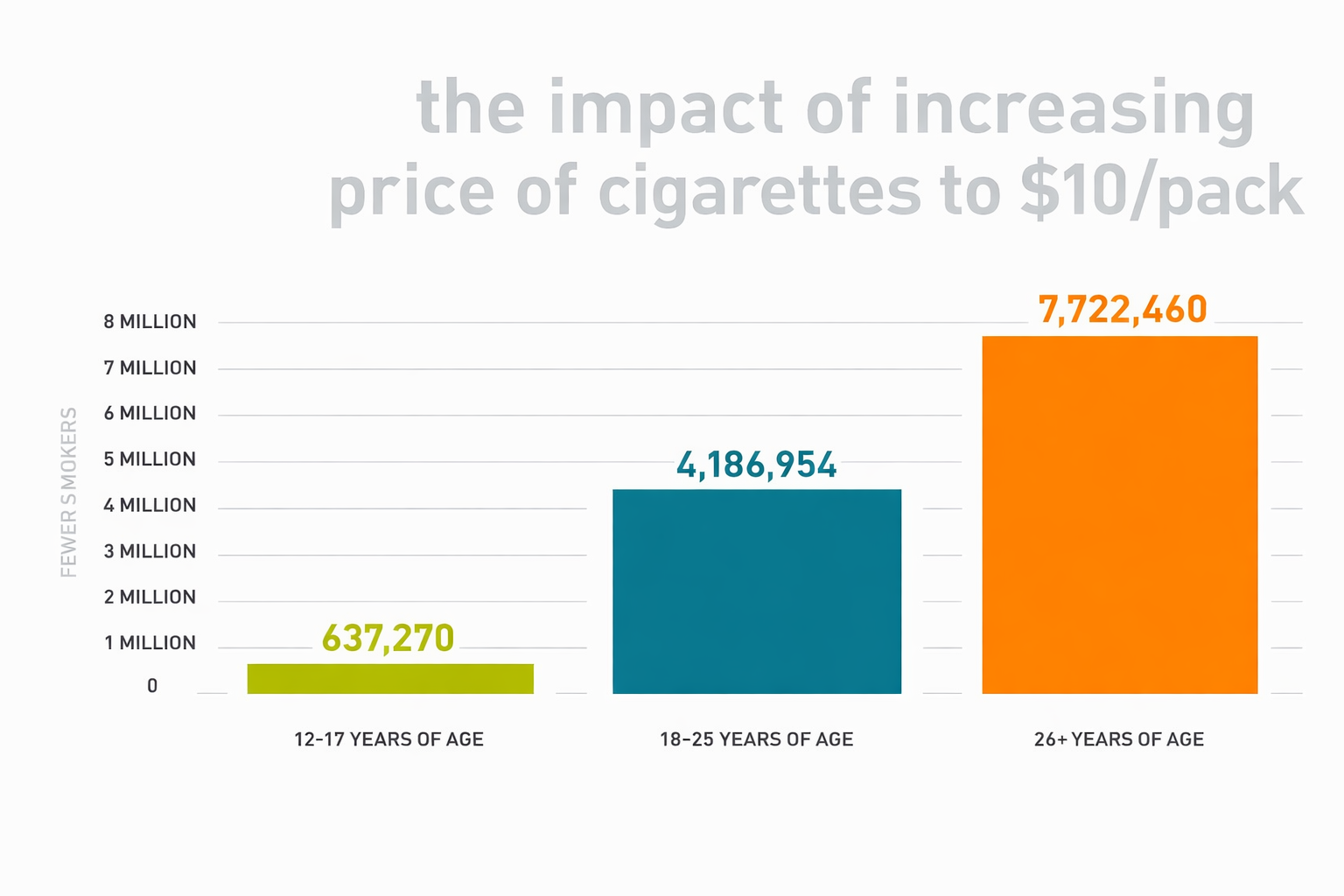
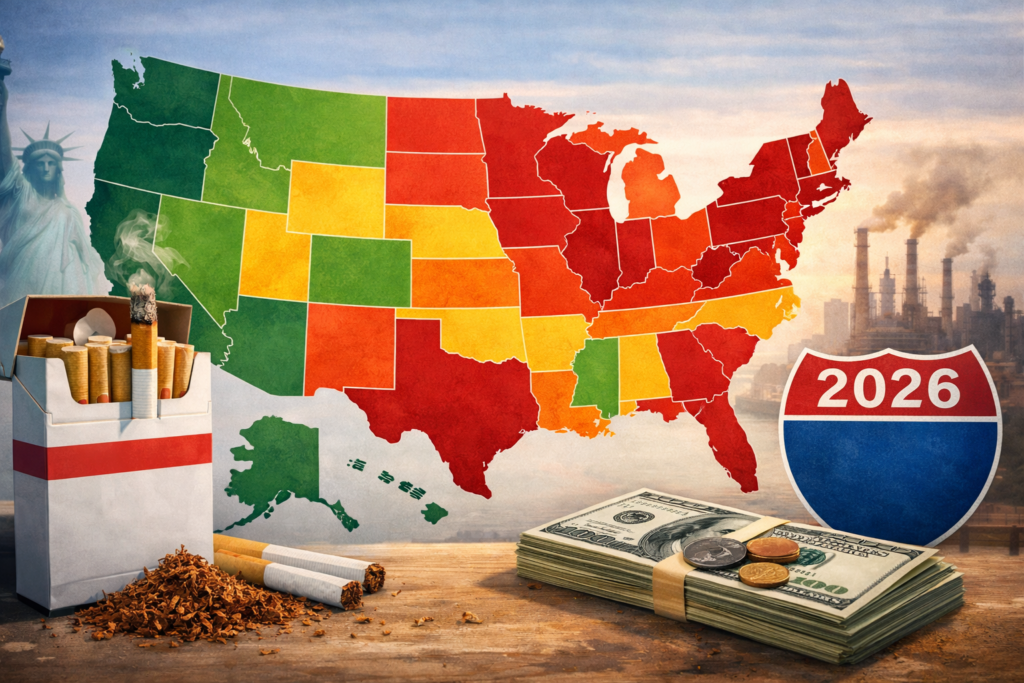
Well the reason behind the 2026 tobacco price surge is the excise tax. Although the $1.01 federal cigarette tax has not risen in years. The state governments in 2026 are increasingly using excise taxes as a primary tool for both revenue and public health. So what exactly is this excise tax? Excise tax is different from the standard sales tax. In sales tax there is a percentage-based consumption tax applied to the final retail price on a packet of cigarettes. Whereas an excise tax is a fixed dollar amount per pack. This tax is imposed to raise revenue and discourage smoking by significantly increasing the retail price.
Now what happens is excise taxes are baked into the wholesale price. That’s why you pay the state’s sales tax on top of the excise tax which makes the price of a packet of cigarettes prohibitively expensive.
Minimum pricing laws (MLP) that kill retail savings
Have you noticed that you cannot find “Buy One, Get One” deals or heavy coupons on premium cigarette boxes in states like New York or Wisconsin? It’s because of Minimum Pricing Laws (MPLs). According to these laws retailers and wholesalers cannot sell cigarette packs below a specific minimum amount. Thus, these laws create a price floor which offset industry’s discounts, coupons, and predatory pricing that try to undermine tobacco excise taxes.
Analyzing the current prices of a pack of cigarettes in the US
There was a time when a “ten-dollar pack” was a rarity and was only found only in big cities. But in 2026 $10 has become the standard reality for smokers in over states. However, there are still a few states where you can buy a pack of cigarettes under $7. So here are the different cigarette prices by state.
Top 10 most expensive states
State | Price per Pack |
New York | $11.96 |
Washington | $10.14 |
Rhode Island | $11.71 |
Illinois | $10.16 |
Connecticut | $11.60 |
Maryland | $10.26 |
Massachusetts | $11.11 |
Hawaii | $10.41 |
Alaska | $10.46 |
Minnesota | $10.49 |
Top 10 least expensive states
State | Price per Pack |
Missouri | $6.11 |
Wyoming | $6.85 |
Georgia | $6.39 |
Alabama | $6.85 |
North Dakota | $6.55 |
Nebraska | $6.84 |
North Carolina | $6.58 |
South Carolina | $6.82 |
Idaho | $6.79 |
Mississippi | $6.78 |
State-wise rising taxes in 2026
The above tables discussed the price of a packet of cigarettes across different states of the USA by the end of 2025. However with effective January 5, 2026 several states have moved to aggressively recalibrate their tobacco taxes. For instance the biggest mover of 2026 was seen in the state of Maine where the cigarette tax jumped from $2.00 to $3.50 per pack. Initially a cigarette pack was around $8.75, however with new taxes it costs $11 per pack. Moreover, smokeless tobacco also saw a massive spike, rising from $2.02 to $3.54 per ounce.
Also the Minnesota state updated its rates to $3.04 per pack plus a specific cigarette sales tax of 84 cents per pack which brings the total state-levied cost to nearly $3.88 before the base price of the tobacco is even added. This makes a $10.49 packet cost somewhere around $14.37 and above.
A major trend for 2026 is the taxation of Alternative Nicotine Products. It is an excise duty or sales tax imposed on non-combustible products containing nicotine, such as e-cigarettes, vapes, nicotine pouches, and heated tobacco. Therefore, from January 1, 2026 onwards a $0.65 per package Tobacco Products Tax now applies to all nicotine products in Washington, Oregon, and Nebraska, replacing the lower Vapor Tax. This is a significant increase for users of disposable vapes and nicotine pouches.
How much is a carton of cigarettes?
While a single packet of a cigarette is a ‘convenience’ buy, a carton of cigarettes is a ‘budgetary’ strategy. In a single carton there are 10 packs of cigarettes. Purchasing a carton usually offers a lower price per pack and saves money in the long run. Moreover, it allows for maintaining a consistent supply at home. That’s why people in the USA prefer to buy a carton of cigarettes rather than a pack of custom packaging boxes with logo. Initially, the price of a carton of cigarettes was around $60 to $110. However, the new, significant state taxes introduced on January 1, 2026, have caused carton prices to soar relative to last year. So let’s see how much is a carton of cigarettes now.
Price Tier | Estimated Carton Cost | State |
Premium / High Tax | $140 - $155+ | New York, Connecticut, Maryland, Rhode Island |
Mid-Range | $100 - $120 | California, Minnesota, Washington, Illinois, Vermont |
National Average | $90 - $100 | Texas, Ohio, Florida, Arizona, Pennsylvania |
Value / Low Tax | $79 - $89 | Missouri, North Carolina, North Dakota, Georgia |
Conclusion
As we wrap up the article, it is clear that the gap between the price of a packet of cigarettes in different states is wider than ever. A smoker in New York now spends nearly $4,000 more per year than a smoker in Georgia for the exact same product. As we look toward the remainder of 2026, expect this trend to continue as more states consider “automatic inflation adjustments” to their tax rates. Staying informed on the changes of price of a packet of cigarettes isn’t just a matter of curiosity. With today’s cost of living, this is key to controlling monthly expenses.
Need custom printed boxes?
Contact us


.jpg)