Simple Conversion Guide to How Many Grams Are in an Ounce?
Recent Posts
-
 Everything You Need to Know... March 9, 2026
 -
 The Ultimate Guide to Discreet... March 6, 2026
 -
 The Simple Way to Measure... March 5, 2026
While baking a cake or working on a cosmetic formula, if your ingredients are little off by a few ounces or grams, it’s just a tiny margin of error. But this is not the case in packaging. Packaging design is a game of millimeters and milligrams. Here a 0.5g error can ruin a whole production of 10,000 units. Thus, for brands who are trying to move their product from the lab to the retail shelf, the conversion of how many grams are in an ounce is more than just math. In fact it’s a logistical pillar and miscalculating your net weight doesn’t just lead to labeling errors. It could ripple through your tare weight calculations and eat into your profit margins.
Therefore, in this blog we will do the conversion math for how many grams are in an ounce so that your packaging stays on the right side of the scale and you can protect both your brand reputation and your bottom line.
Understanding the difference between “Grams vs. Ounces”
Grams ⇄ Ounces Converter
Ounces and grams are both units of weight with different metric values and most commonly used to measure ingredients for a recipe. But in packaging math, you have to understand that grams and ounces aren’t just different numbers. They represent two entirely different philosophies of measurements and belong to different metric systems. So let’s study both in detail.
What is an ounce?
In the world of packaging and commerce, an ounce is a unit of weight used primarily in the United States and occasionally the UK where the Imperial System of measurement is followed. Ounce was first used as a unit of mass in ancient Rome, where it was known as the “Uncia”. While much of the world has moved on, the U.S. consumer market still thinks, buys, and cooks in ounces. But buying in ounces is not easy because there are three different types of ounces and for your packaging, knowing the right one is necessary.
Avoirdupois Ounce
This is the “ounce” used to describe the standard weight unit for consumer goods. So, if you are putting a physical product in a box or bag, you are using the Avoirdupois Ounce. It is used to measure weight of dry goods like pasta, protein powder, or shipping boxes. In grams Avoirdupois Ounce is approximately equal to 28.3495 grams.
Fluid Ounce
A major packing error is mistaking volumetric weight and actual weight. For liquids like water, honey, oils, juices, serums, or lotions we use fluid ounces. It measures space, not heaviness, therefore, this measurement is converted into milliliters and not grams. This makes:
1 Fluid Ounce = 29.57 milliliters (ml) |
Troy Ounce
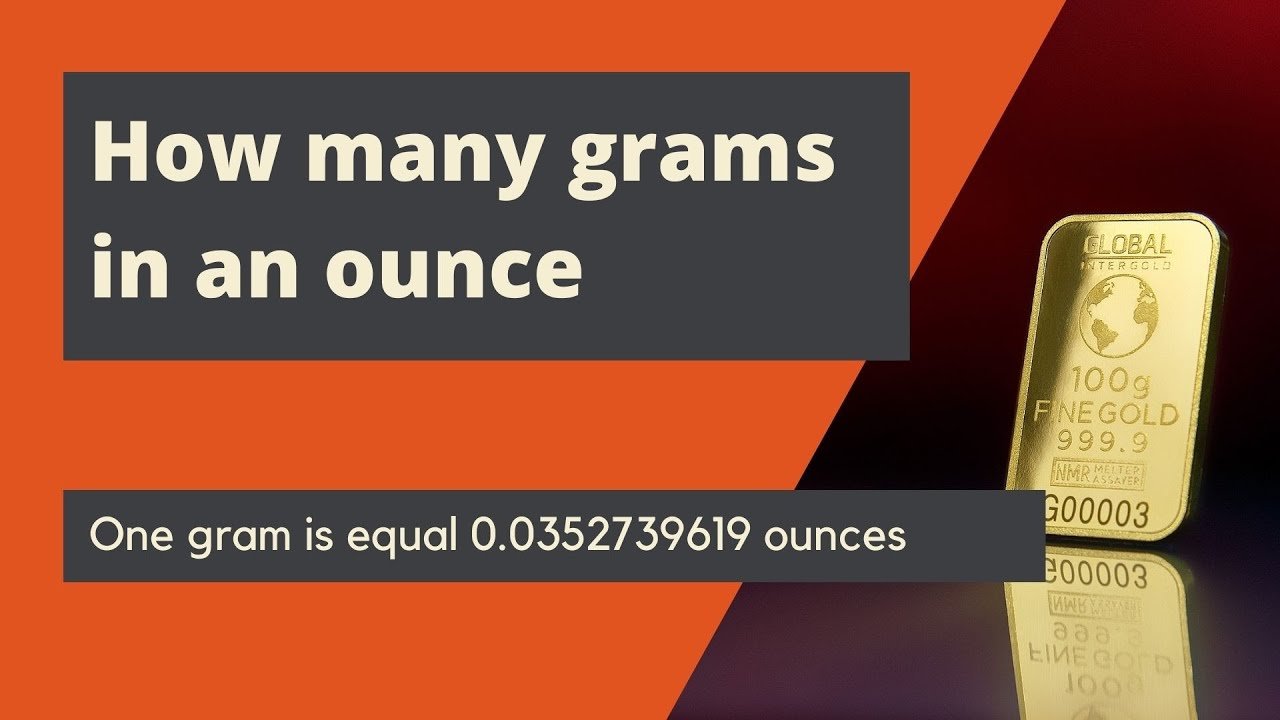
Troy Ounce has no role in the packaging or retail market. It is basically used to weigh precious, heavy metals like gold, silver, or platinum. Therefore, in gram it has a higher value than avoirdupois ounce. Thus:
1 Troy Ounces = 31.03 grams |
What is a gram?
If the ounce is the traditional king of US retail, the gram is the universal language of global manufacturing. It is a part of the Metric System and is used in science, medicine, and international trade.
How many grams are in an ounce?
Now that you know the difference between an ounce and a gram, let’s proceed with their conversion to ensure accuracy in product filling, compliance with labeling standards, and cost-effective shipping. So:
- 1 ounce (oz.) = 28.3495 grams (g)
- ½ ounce or 0.5 ounce (oz.) = 14.17 grams (g)
This for a 10-ounce bag of candy a metric net weight in grams will be: 10 oz. x 28.35 = 238.5 grams. Thus, the labeling on a custom candy box will be printed as “Net Wt. 10 oz. (239g)”. Similarly,
1 gram = 0.0352 ounces |
So people who ask questions like is a gram more than an ounce or is a gram bigger than an ounce? The answer is “NO”, a gram is significantly smaller than an ounce.
“28.35 vs. 28” The golden rule for conversion
The most frequent error new brands make is rounding down to an even 28g for a 1 oz. product. Maybe this works perfectly in cooking or baking but in the world of custom packaging boxes it’s a legal liability. Regulatory bodies like the NIST and the FDA have strict tolerances. If your label says “1 oz. (28g),” then you are technically under-filling every single unit you sell. Because the legal definition of an ounce is actually 28.3495g. Due to its rounding off error, brands have to face a “Stop Sale” order. They are forced to re-label or destroy the entire stock and pay a hefty fine per violation.
A checklist for ounce-to-gram labeling
Now that all the confusion regarding how many grams are in an ounce is clear, let’s see what is the right way of labeling custom retail boxes. In the United States, your packaging doesn’t just need to be accurate. It needs to follow a specific regulatory “language” governed by the FDA and NIST. Therefore, your package must list contents in both:
- U.S. Customary Units: Ounces (oz.) or pounds (lbs.).
Metric (SI) Units: Grams (g) or kilograms (kg).
The correct way of labeling is:
- Print the net weight statement at the bottom custom product boxes.
- It should not be merged with product information and must be a distinct font from the rest of the text on a box.
- It must run parallel to the base on which the package rests.
The purpose of this clear labeling is twofold. One is to ensure that U.S. consumers can easily compare values and second is to prepare American brands for the global, metric-standard marketplace.
Conclusion
Now that you know there are 28.35 grams in an ounce so just remember one golden rule. In packaging precision is the insurance policy therefore, the cost of a tiny rounding off is huge. It can ripple through your supply chain, leading to failed audits, shipping surcharges, and costly relabeling projects. So, treat your conversion from ounces to grams as a critical quality control step and not a last-minute afterthought. For highly compliant and accurate packaging you can get your custom product boxes from Boxit Packages. Despite premium durability, our boxes are printed with flawless typography and no zero error. Visit our website Boxit Packages and get a free quote today!
.jpg)
