Choosing the Right Poly Bags for Shipping Clothes
Recent Posts
-
 Are Double Wall Boxes Stronger... March 17, 2026
 -
 How Do You Convert Milliliters... March 16, 2026
 -
 What Does 4 Ounces Look... March 13, 2026
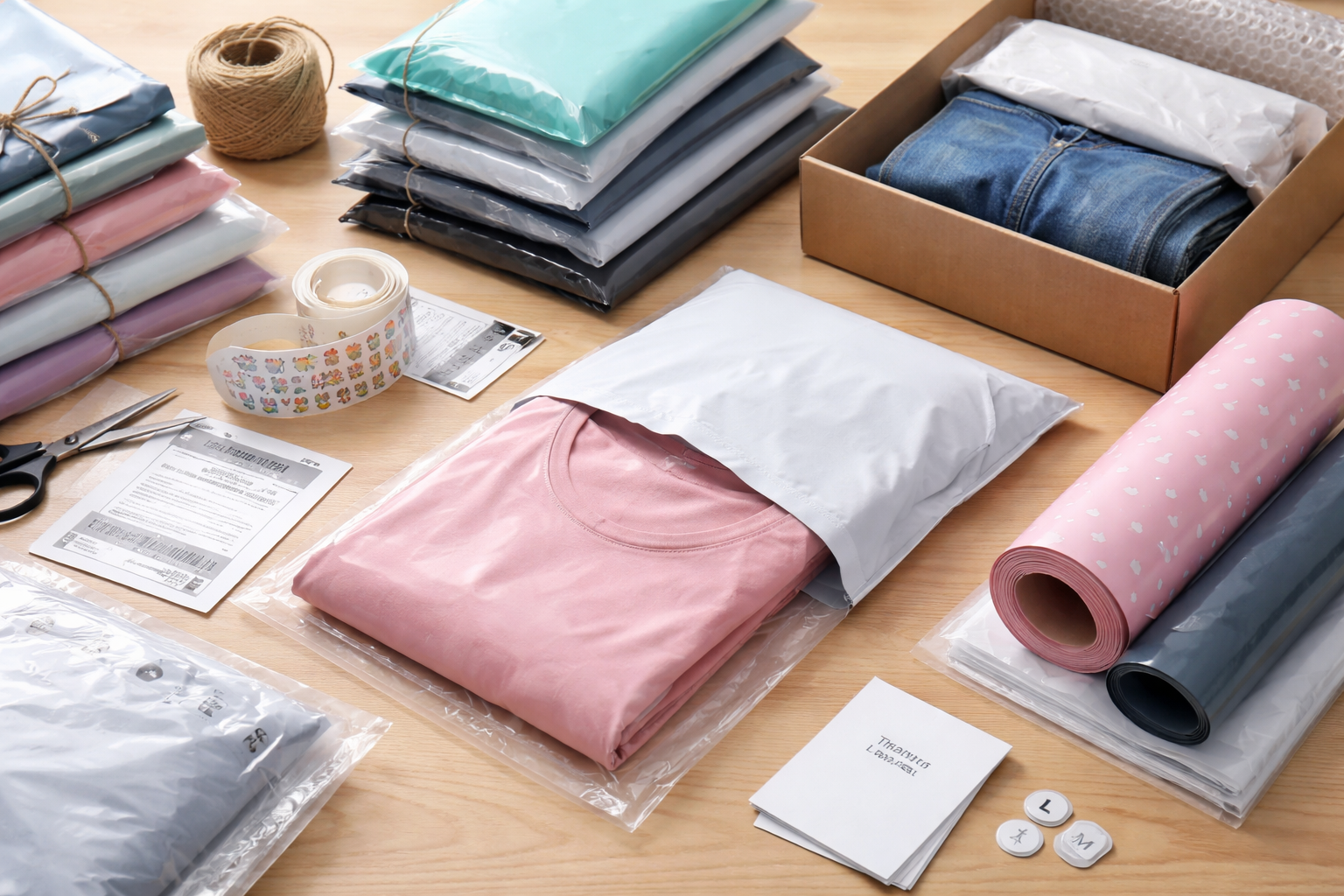
Shipping clothes might seem safe but during transit there is a possibility of damage due to unpredictable weather and rough handling. This is where things go wrong. Because a customer demands a garment that is pristine and smells fresh. Not the one that has spent three days in dust and moisture through a poorly sealed bag. Therefore, there is a lesson for all the sellers who view packaging as an afterthought that using a wrong bag for shipping is a recipe for disaster. Be very careful about shipping bags for clothes and go for poly bags. They are lightweight, waterproof and indestructible heroes of apparel shipping.
If you don’t know what poly bags are then blog is you. In this guide, we will discuss what different shipping bags for clothes are and how to choose the right one to protect your profit margins and brand reputation.
What are different shipping bags for clothes?
With the massive shift toward digital retail, selecting durable shipping bags has become paramount for apparel safety and to reduce costly returns. That’s why most of the e-commerce businesses in 2026 have moved toward 100% recycled poly mailing bags for clothes to meet both durability and sustainability needs. They are great because these bags are made of multiple layers of biodegradable plastic fused together. It is nearly impossible to tear them by hand. Thus, the clothes remain safe from the hooks and snags of sorting machines. Moreover, they come in different sizes and can be customized to your branding requirements.
Another option for apparel shipping is heavy-duty paper mailers. They are a sustainable alternative but can absorb moisture and are more expensive than poly bags.
Why poly bags are the gold standard for apparel
Traditional packaging crumbles under pressure and is not safe for the planet. Whereas poly bags are designed to flex, stretch, and resist the tears of transit. Also, they are made from PLA, PBAT, PHA, and cellulose films. Therefore, these environmentally responsible bags reduce plastic waste. Some other benefits of these shipping bags for clothes are:
Cost-effectiveness
Unlike rigid corrugated boxes, poly garment shipping bags are incredibly lightweight. This is a critical factor in reducing dimensional weight costs. Since shipping carriers calculate rates based on the space a package occupies as well as its weight. These lightweight and compact bags can optimize your package volume and slash shipping fees by 30%.
Durability
Beyond cost, the durability of apparel bags for shipping is engineered for the rigors of transit. As they are made with multi-layered PLA or PBAT plastic. Thus, there is a minimal chance of a tear or puncture during shipping. Moreover, ploy mailer bags are naturally moisture-resistant. So, whether your package is left on a rainy porch or handled in a humid sorting facility, the fabric inside remains soft and pristine.
Storage
Poly bags are a storage marvel. You can stack them because they take less warehouse space than cardboard boxes. For example, to place 500 cardboard cartons might require several pallets but 500 poly bags can fit comfortably in a single desk drawer. Thus, you can save your money on extra square footage.
Types of poly bags and their common applications
Not all garments are created equal and neither are the bags that protect them. Therefore, it is imperative to know your poly bag options for successful garment shipping. Here is a list of different types of poly shipping bags for clothes. Explore and choose the one that fits perfectly with your product.
Clear poly bags
Bubble-lined poly mailer bags
Gusseted poly mailers
Key factors for selecting poly mailers for apparel shipping
The cost of ‘cheap’ bags is often paid in the form of damaged inventory and lost customers. Therefore, you must look at the price and focus on specifications of a ploy bag for professional apparel shipping boxes.
Here are four “Must-Have” specs for professional-grade shipping.
“Thickness” The gauge of protection
Adhesive Strength
Opacity
Sustainability to meet the modern standards
Size Guide: Find the perfect for your products
Selecting the wrong bag size isn’t just a minor inconvenience. It’s a drain on your resources. A too small package risks rupturing in transit whereas using a bag that is too large causes excessive creasing and increases dimensional shipping costs. Therefore, you need a strategic approach to sizing.
- Small-sized poly bags: These bags measure from 6″ x 9″ to 7.5″ x 10.5″. They are known as “Accessory” bags and are designed for items that are lightweight such as socks, beanies, swimwear, lingerie, or a single thin t-shirt.
- Medium-sized bags: They are “Universal Standard” of the poly bag world with dimensions 10″ x 13″. You can use them for packing t-shirts, dress shirts, leggings, lightweight sweaters, or a pair of jeans.
- Large poly bags: These bags are used for shipping bulky items. Such as hoodies, denim jackets, or thick knit sweaters. The size of the large poly bag is 12″ x 15.5″.
- Extra-Large / Gusseted bags: These 14.5″ x 19.5″ bags are reserved for the “heavy hitters” of your collection. Like puffer jackets, winter coats, or large wholesale bundles.
Factors to consider when sizing
Consider these factors when choosing the right shipping bags for clothes.
- Product dimensions: Double-check measurements for an accurate fit.
- Quantity: determine the total number of items in the shipment as it is important for product fitting.
- Extra protection: Opt for a slightly larger box when packing with bubble wrap to accommodate extra cushioning.
Conclusion
Ultimately, the poly bag you choose is more than just a container for transit. It’s the safety step inside and the first impression outside. Choosing a robust, structurally sound, and green mailer, you are not fulfilling an order. In fact you are delivering a promise of quality. So, if you want eco-friendly shipping bags for clothes Boxit Packages is the right packaging partner. We are FSC-certified, specialize premium and cost-efficient shipping solutions for online sellers. Our most popular product line includes corrugated mailers, flat apparel boxes, mailer tubes, poly mailers, and bubble mailers. Our shipping is free with zero hidden taxes.
.jpg)
