

On this page
The most expensive package you will ever ship is the one that arrives broken. Yes, studies show that replacing an item can cost companies 17 times more than the original shipping cost. The major cause of this product damage during shipping is that business packaging strategies are stuck in the last two decades. However, with an increase in e-commerce, the rules of shipping have changed. Now, with the pressure to deliver a one-piece product. The businesses have to deal with the strict dimensional weight standards of the shipping carriers. At the same time, consumers demand for zero-waste packaging. To help you navigate this landscape, we’ve broken down three biggest packaging problems that businesses face. Moreover, we will share the solutions to fix those problems before the next shipment leaves your warehouse.
3 Common packaging problems that businesses face
Modern packaging is a high-stakes balancing act between protection, sustainability, and cost. Many businesses struggle to make these three ends meet. This is because their focus is on product development. Therefore, they overlook these critical necessities of packaging. Let’s identify these packaging problems in detail and fix them.
Product damage during shipping and handling
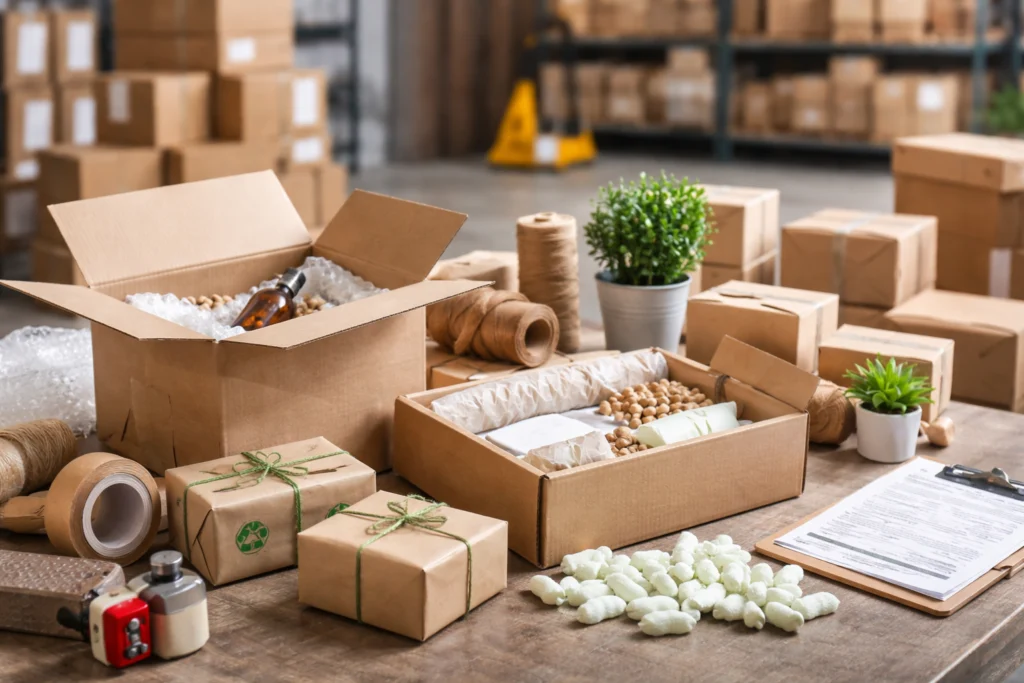
What businesses don’t realize is that the journey from their warehouse to the customer’s door is violent. A package has to go through high speed conveyors, temperature shifts and human error. Using a filmy or one-size-fits-all box is what makes this process difficult. Just to save a few bucks of packaging, companies opt for generic boxes. These boxes are made of low-quality cardboard with no proper dimensions. Therefore, these boxes have voids that lead to product shift and breakage. Secondly, they lack structural reinforcement. Thus, they are unable to protect the item inside during storage, transit, and handling. As a result brands have to pay hefty replacement costs.
An effective solution to prevent product damage
The gold standard for damage prevention is a multi-layered approach. This means businesses need to prioritize external strength and internal shock absorption. For this, the first step is the accurate sizing. Carefully measure your product’s length and width and customize your packaging according to its dimensions. Next, choose a durable packaging material. The best option for shipping is custom cardboard packaging boxes and corrugated cardboard boxes. You can design these boxes in double or triple-wall structures. Lastly, use foam inserts or packing peanuts, if there are voids in a shipping box.
The growing demand for sustainable packaging solutions
Businesses are currently caught in a ‘Green Squeeze’. One side is consumer peer pressure. They are demanding an end to over-packaging and plastic containers. They are switching to brands that sell their products in custom product boxes with zero plastic content. On the other side, the government is imposing heavy taxes, fines and penalties on businesses that use traditional packaging containers. The urgent need to adopt sustainable packaging without letting the higher material costs erode their bottom line.
Achieve green excellence
In 2026, the benchmark for sustainability is “Recyclable by Design”. This means you need to manufacture your custom packaging boxes using mono-materials. These materials ensure your box ends up in a new product, not in landfill. Because mono-material packaging is easy to recycle. You don’t need to separate different layers. Like plastic, paper, or aluminum. You can even go for plant able seed packaging. A packaging that turns into a flower when planted in soil after the product is used. By following these strategies, businesses can fulfill the consumers demand and do not have to pay hefty fines. Moreover, these eco-friendly packaging solutions are cost-effective.
Rising costs and inefficiency
According to packaging industry news, of all the packaging problems, inflation, supply chain disruption, and high packaging costs are at the top. This erodes the profit margin and even leads to operational delays and unsatisfied customers.
Fixing the rising costs
High costs can stem from inefficient processes. Like use of excessive material, abstaining from local raw material, and increased shipping cost due to higher operational expenses. To resolve these issues the best practice is to:
Customize accurate-size custom packaging boxes. This will help in reducing material waste and lowers dimensional shipping charges.
Implement automation for certain processes. Such as labeling, sealing, and palletizing. This will save the labor cost, reduce human error, and increase efficiency.
Conclusion
Solving these three common packaging problems is about more than just saving on shipping. It’s about delivering your promise you made with your customers when they decided to shop from you. Although the challenges of transit damage, eco-expectations, and rising costs are universal. But the solutions are within your reach. Just start by identifying these problems. Take effective measures today. So that tomorrow you can secure your shipments and your customers.
Need custom printed boxes?
Contact us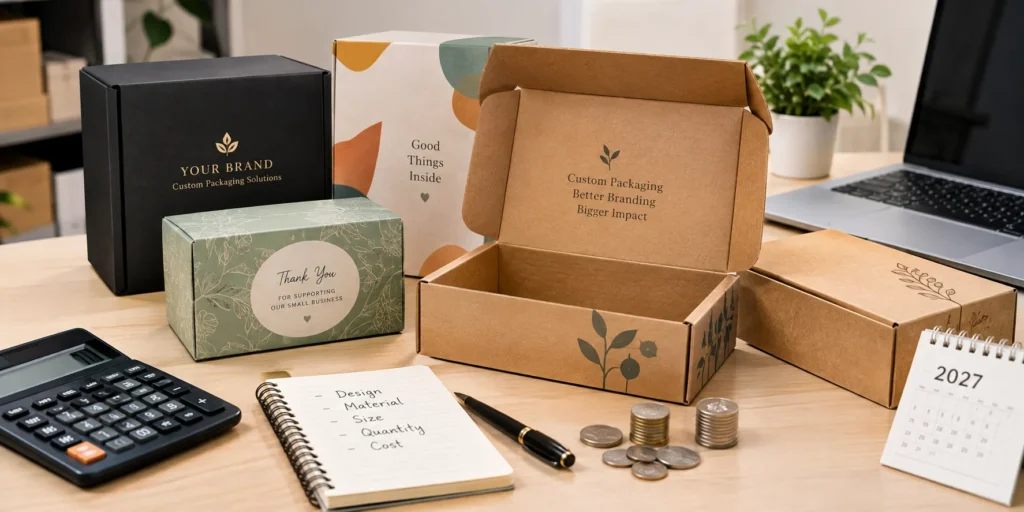

.jpg)