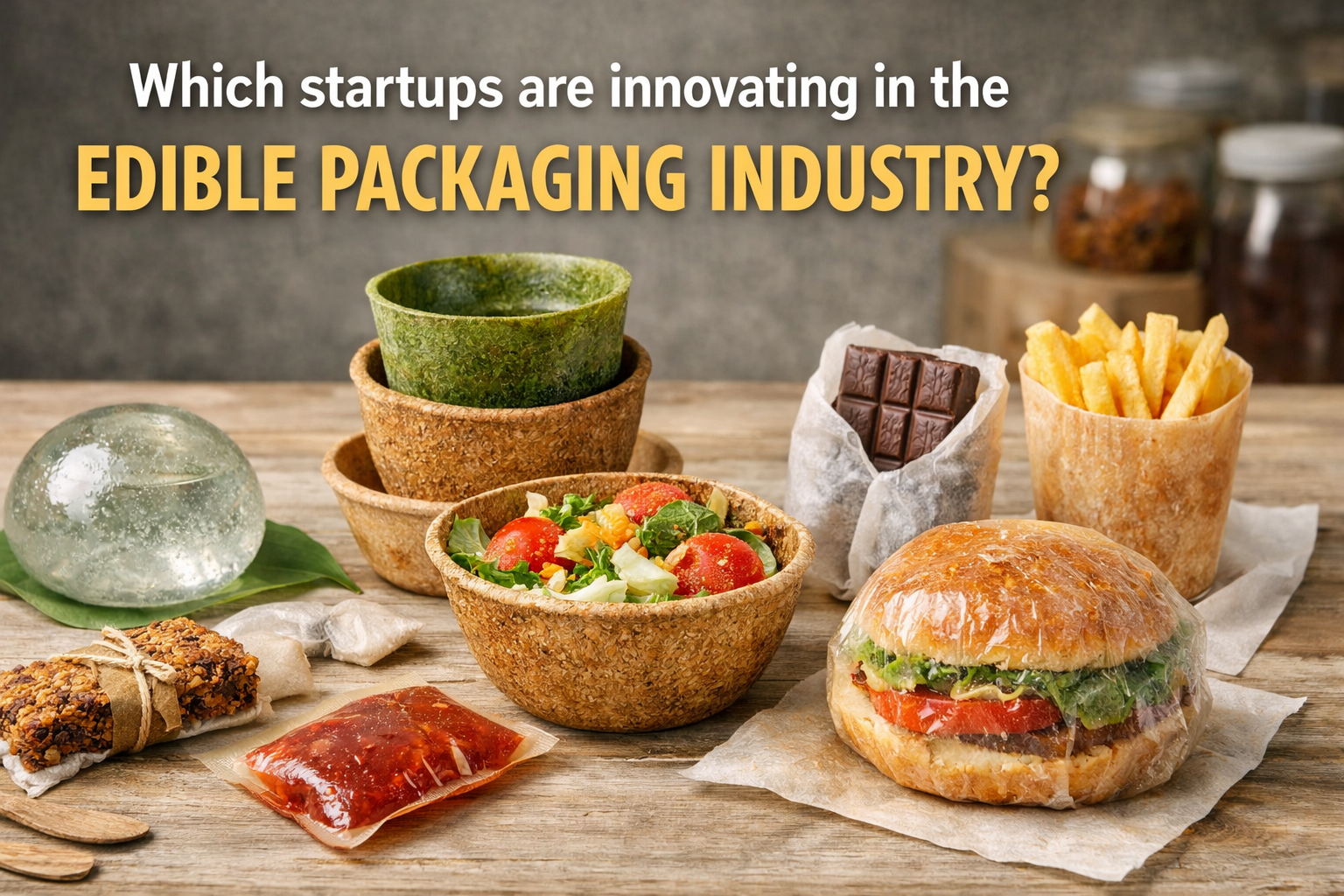
Which startups are innovating in the edible packaging industry?
Recent Posts
-
 What Is the Standard Shoe... March 26, 2026
 -
 What Is Glassine Paper? Uses,... March 25, 2026
 -
 Bankers Box Dimensions Guide: Sizes,... March 24, 2026
Every year the food industry generates a staggering amount of plastic waste. It alone adds up to 30 to 40% of the pollution and is expected to triple by 2050. Despite introducing numerous recycling programs and recyclable materials for packaging. There is hardly a decline in plastic pollution. Therefore, the packaging industry set out to look for a “Net Zero Waste” solution and found an innovative one. It’s edible packaging. Yes recycling is a good step, but the best sustainable package is the one that never becomes a waste. While traditional ‘biodegradable’ plastics take years to decompose, edible packaging disappears in seconds. Moreover, it provides a nutritional boost to the consumers as it contains macronutrients. So stop recycling and start eating!
If you are thinking of adopting edible packaging for your products then you are at the right place. In this blog, we will walk you through what edible packaging is, what are its different types, and what are its pros and cons. Also in the end we will provide you with a list of innovators who are making ‘waste’ delicious.
What is edible packaging?
The term “Edible Packaging” is self-explanatory. It’s a packaging made from food-grade materials that are derived from natural biopolymers and are safe to consume. You can eat it after finishing the food or even discard it. It will decompose naturally just like an apple peel.
It is also known as the zero-waste food technology. Because if you eat the wrapper there is no trash and if you throw it in the grass it will disappear in days or weeks. An active benefit of this packaging is the extended shelf life. You can infuse your edible packaging materials with vitamins and antioxidants. They act as free radical scavengers, absorb the reactive oxygen, and make the food healthier and fresh longer than any plastic can.
Different types of edible packaging
One size does not fit all in the world of sustainability. Many companies think that this packaging is limited to ice cream cones, cookie coffee cups, and candy wrappers. However, they miss out the material revolution that spans from seaweed films to protein-based coatings. Yes, edible packaging for food comes in diverse forms. Based on the material type, films, coatings, and structures, there are more than 10 types of the packaging. Some of them are listed below:
Edible food packaging by material
From the salty depths of the sea to the byproduct of the dairy industry, the raw materials for edible food packaging are as diverse as they are revolutionary. They include:
Polysaccharide packaging
This is food-grade packaging derived from natural polymers of plants and algae. The common example is starch from corn, potatoes, or cassava, cellulose, and alginate. It is also known as the “superstar” of edible food packaging as it blocks oxygen and keeps the food fresh. However, it is hydrophilic. Therefore, it needs some lipids infusion to make it moisture-resistant.
Protein-based food packaging
Unlike traditional bioplastics, protein-based edible food packaging is derived from animal and plant proteins such as casein, gelatin, soy, and wheat gluten. This packaging is 500 times better than LDPE at blocking oxygen and keeps the food fresh with chemical preservatives when loaded with vitamins.
Seaweed bio-packaging
It is derived from agar or alginate and is used to create dissolvable films and gel-like containers, like smoothie pouches.
Edible food packaging by structure
Up till now only ice cream waffle cones and wafer papers were the only edible items. However, packaging innovators have introduced many other options as the crunchiest part of the food. For example:
- Cup and bowls: To combat plastic pollution now packaging companies offer edible cups and bowls made from cookie dough or pressed-rice paper.
- Straws: Now you can enjoy a sweet snack after finishing your beverage by eating the straw. These straws are made using rice, tapioca, cornstarch, and even seaweed.
- Bottles: Now you can consume your bottle packaging once you finish drinking water. Because the packaging industry has introduced seaweed-based membranes that encapsulates drinks. These membranes include sodium alginate, therefore, they are safe to consume.
Why your business needs edible packaging
One of the major reasons for using edible pouches for custom packaging boxes, films, containers, and water balls is that governments worldwide have declared a war on plastic polymers. Businesses that can turn their waste into a product feature can thrive. Some other benefits are:
- Offering products in custom packaging boxes that are consumed adds a “Wow” factor that provides free marketing through social media sharing.
- Eco-conscious consumers willing to pay a premium price for “Zero-waste packaging”. Thus edible packaging offers the highest growth rate and increased revenue.
- Edible sachets used for packing powders and liquids reduce the need for bulky packaging. Thus, you can save a lot on shipping and storage costs.
List of innovators startups that offers edible food packaging
While traditional packaging companies are trying to recycle the past. Following are a few startups that are engineering the future that you can eat.
♦ Notpla
Notpla is a UK-based company. They use algae and plant polymers to manufacture edible food containers. However, they are known for their “Ooho” membrane, a consumable liquid encapsulation.
♦ Noriware
If you want 100% natural and food-grade films and cups that are safe to consume. You can get it from Noriware. This is an edible packaging company that uses seaweed polysaccharides to manufacture high-performance materials. Their two flagship products are Norifilm and Noricup.
♦ StenCo
StenCo is a US-based startup. They offer vegan, oxygen-barrier film comes by the name (StenCoat) from plant-based materials to keep food fresh.
♦ Monosol
Monosol is famous for its Vivos line of edible water soluble films. These are used in instant food packaging of oatmeal, hot chocolate, or protein powder. While preparing the food you can dissolve the entire pouch in hot water, add it in the meal, and it becomes a part of the food.
Conclusion
While traditional recycling was a noble first step. However, the future of the circular economy is the consumability. Therefore brands that ditch the plastic for seaweed, starch, and protein packaging need our support. Because they are helping us with lunches that do not have a 500-year environmental legacy.
.jpg)