Tips and Tricks to Design Great Board Game Packaging Easily
Recent Posts
-
 Everything You Need to Know... March 12, 2026
 -
 Safe Computer Shipping Guide: Protect... March 11, 2026
 -
 How Playing Cards Are Printed... March 10, 2026
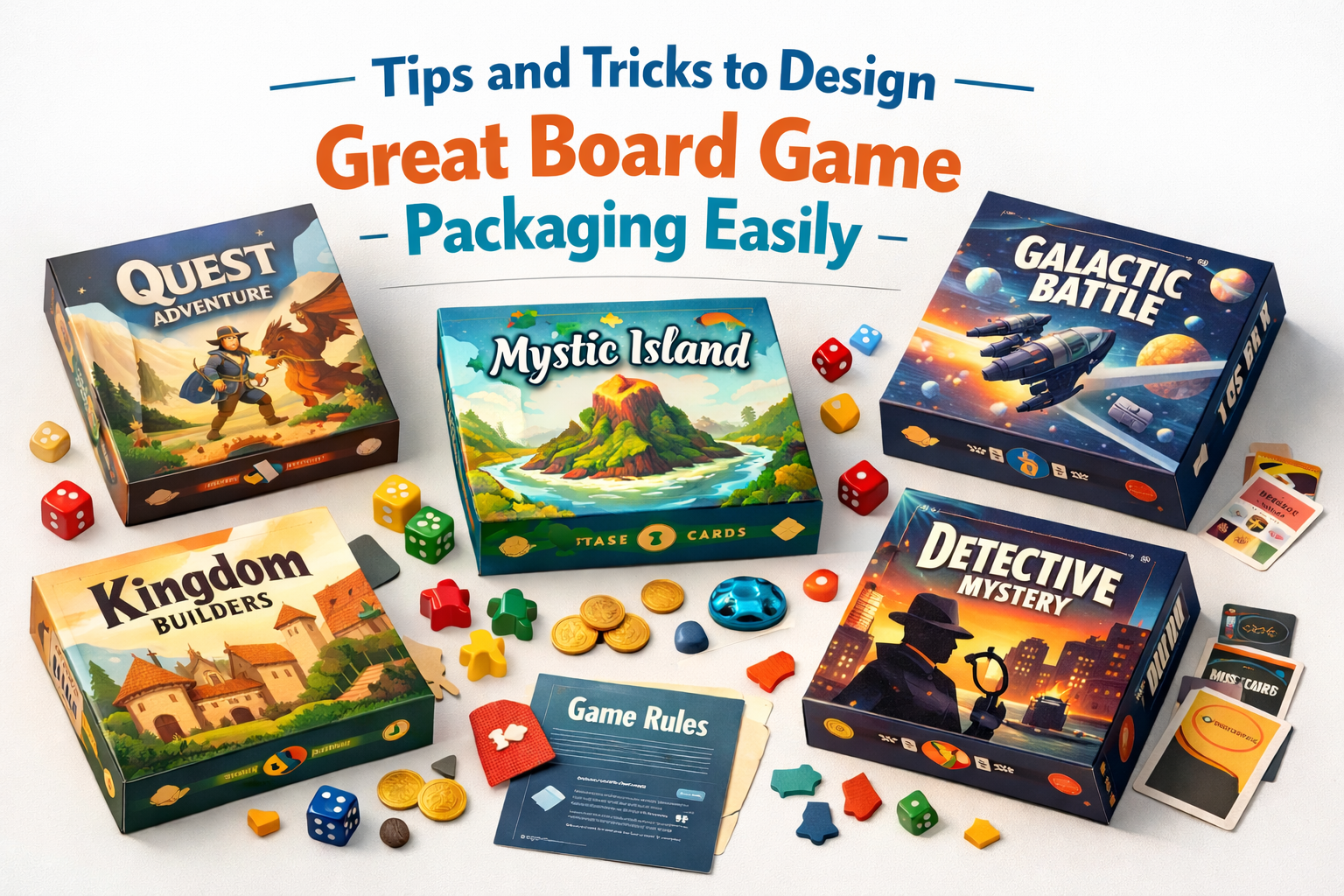
After spending hundreds of hours in balancing the mechanics and rules of your board game. You may think that you’ve successfully surmounted every obstacle in creating a perfect game. But you are wrong. Because next you’ll face the toughest challenge: the retail shelf. When you walk into any local game store, you’ll find a variety of vibrant colors, intricate art, and “open-me” invitations. In such a crowded market, your board game that sells a set of rules is a missed opportunity. A successful game is the one that sells an invitation to an adventure that starts with the packaging. Great packaging isn’t just a pretty face. It acts as a silent salesman by utilizing visual cues to display the game’s genre and theme. And works as a robust suit of armor to protect the delicate components inside. So, treating your game packaging as an afterthought.
If you want to design a “must-buy” game packaging, then read this blog. We’ve discussed the essential tips to design a board game box that looks professional, feels premium and sells itself. So let’s get started!
The fundamentals of board game box design
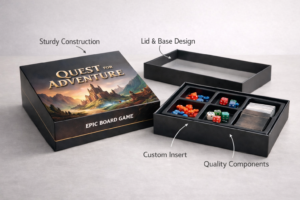
Designing a board game box is like a high-stakes puzzle. Because it merges art, marketing, and engineering in one frame. Therefore, you need to be a professional architect to solve this puzzle. Before you pick up a stylus or open Photoshop, you need to understand the “rules of the road” for board game boxes design. This means your game packaging is deficient without the following three key elements.
Choose an appropriate box style for storage and shipping
A beautiful box means nothing if the game arrives crushed and the components inside are rattling in a void of wasted space. Therefore, choosing the correct box type, style, and size for a board game is pivotal. Usually chess, monopoly, jenga, scrabble and many others have numerous components. Like game boards, tokens, cards, and blocks. The box needs to be appropriately sized to fit these components. Moreover, when you design custom printed packaging boxes make sure to integrate inserts to keep everything secure and organized when not in use.
Speaking of the box’s style, it should be functional and convenient to use. Because a poor design can be frustrating to open and close. Thus, it creates a negative impression of the product. There is a wide range of packaging styles that you can pick. Such as:
Two piece rigid boxes
In the tabletop industry, the two piece-rigid box is a gold standard. This is the safest option if you want to create a premium and professional look of your game. Made from thick, high-density rigid board, these boxes consist of two parts. A top known as the lid and the base. Structurally, two-piece rigid boxes are highly durable and withstand the weight of heavy components without tearing or bowing. The best feature of these rectangular boxes is it’s easy to pack multiple components inside without minimal protective padding. Plus, you get four large sides for branding.
Mailer Boxes
Remember the first rule when it comes to game packaging is it should be of minimal size. That’s why mailer boxes are titled as the heroes of the “direct-to-consumer” world. Since, these boxes are made from E-flute or B-flute corrugated cardboard. Therefore, mailer boxes have great shock absorbing capacity. They can protect the game components from the drops and tosses of the shipping process. Also, these boxes are designed with tuck-in flaps. The flaps keep the box securely closed without spending extra penny on adhesives or padding.
Add branding elements for visual appeal and unique edge
In a market flooded with new releases, branding is the ‘unique edge’ that prevents your game from fading into the background. Moreover, it gives your board game a distinctive thumbprint that players can recognize from across a crowded room. So if you don’t want people to pass over your game. Then, make sure to incorporate the following features.
‘Logo’ the face of your game packaging
You must have played these iconic games. Monopoly, Checker, Go, and Chess. Do you know all these timeless classics share one thing? The logo. In a sea of competing titles, your logo is your game’s most powerful tool for instant recognition and shelf-presence. Furthermore, it is even a sign of assurance to the game player, that although there may be new editions, the game itself hasn’t lost its classic values. The best example of this is Monopoly. Launched in the year 1904 and all the way to 2025. This board game company has released numerous editions. But their red and white logo has been a symbol of continuity for decades. Because it’s their signature that enhances the brand’s credibility and builds trust in the audience.
A strategic color palette
What first grabs a potential buyer’s attention is the color arrangement. As it makes the game look polished, engaging and invites the player in. Secondly colors are like visual story tellers. They provide a visual shorthand for the world the game is set in, the nature of the challenges, and the overall tone of play. Thus helping the customers to make an informed decision. Therefore, choose a consistent color scheme that aligns with the game’s personality and apply it across all components. Also, make sure the placement of the logo and graphics is not just on the front of the box but around all sides. This ensures visibility from multiple angles on store shelves.
Readable and clear typography
One major function of game packaging is to inform players of the game’s features. For example, the name of the game, the age range, the number of players, and a brief description or teaser of what the game involves. That’s why use fonts that match the game’s style, but don’t sacrifice legibility for aesthetics.
Many gaming companies integrate logos, specific color ways, and appealing graphics to elevate presentation. Yet, the packaging fails to grab the customer’s attention. What they miss is the luxury finish. A matte lamination, a spot UV coating, or a foil stamped artwork is the one that can make your game leap off the shelf. Also, adding a luxury finish creates an unboxing experience that feels like opening a treasure chest.
Select suitable material to enhance the product’s perceived value
It is a commonly asked question on how to make board game box appealing for modern gamers as video games have taken over the gaming industry. Well, modern gamers aren’t just looking for fun. They also search for craftsmanship that respects the environment without sacrificing the premium feel. Therefore the materials used to manufacture a board game box are crucial in defining the game’s quality and environmental impact. For example, a rigid board box suggests quality, premium look, and robustness. Whereas a game packaging made from Kraft paper gives a rustic look. This will not only attract the eco-conscious players but reflect the company’s commitment to planet safety. Lastly, you can finish the packaging material with a matte or a flossy film. It will increase the perceived value of the game and allow premium pricing.
Conclusion
Designing a great board game box doesn’t require a massive studio or an endless budget. It just demands three basic design considerations. A functional box style and compact size, effective branding, and premium quality material. If you still struggle with designing your game packaging. Contact Boxit Packages. We manufacture the best board game boxes in town.
.jpg)
