How Varnish Is Used in Printing and Packaging to Improve Finish?
Recent Posts
-
 The Ultimate Guide to Printing... March 3, 2026
 -
 Cigarette Prices across the US... March 2, 2026
 -
 Does UPS Deliver to PO... February 27, 2026
Packaging boxes have become a crucial part of the routine. They contain, protect and beautify branded products. Alternatively, users utilize them for storage and gifting purposes. Besides, manufacturing product packages cannot be accomplished in a single session. It is a multi-day commitment and encapsulates numerous steps to create the desired style and surface. Speaking of the latter, there is the varnish used for printing and packaging. It offers the final protective and attractive attributes to the surface.
Nevertheless, the world of retail is competitive. To be noticeable and highly functional is imperative. This is because looks affect the purchase decision and professionalism typically wins in driving sales. Therefore, examine the following guide for determining the versatility of varnishes. We have listed kinds, application processes, perks and much more!
Comprehending Various Kinds of Varnish Finishes
First, what’s a varnish finish? As a matter of fact, it is what the appearance of a product or packaging looks like after the coating has dried. How it will reflect the light or how it will feel on your hands. This is the true definition of varnish finish. Moreover, it has many types. For instance, spot UV, satin, gloss and matte.
Gloss Creates a Reflective Surface & Boosts Liveliness
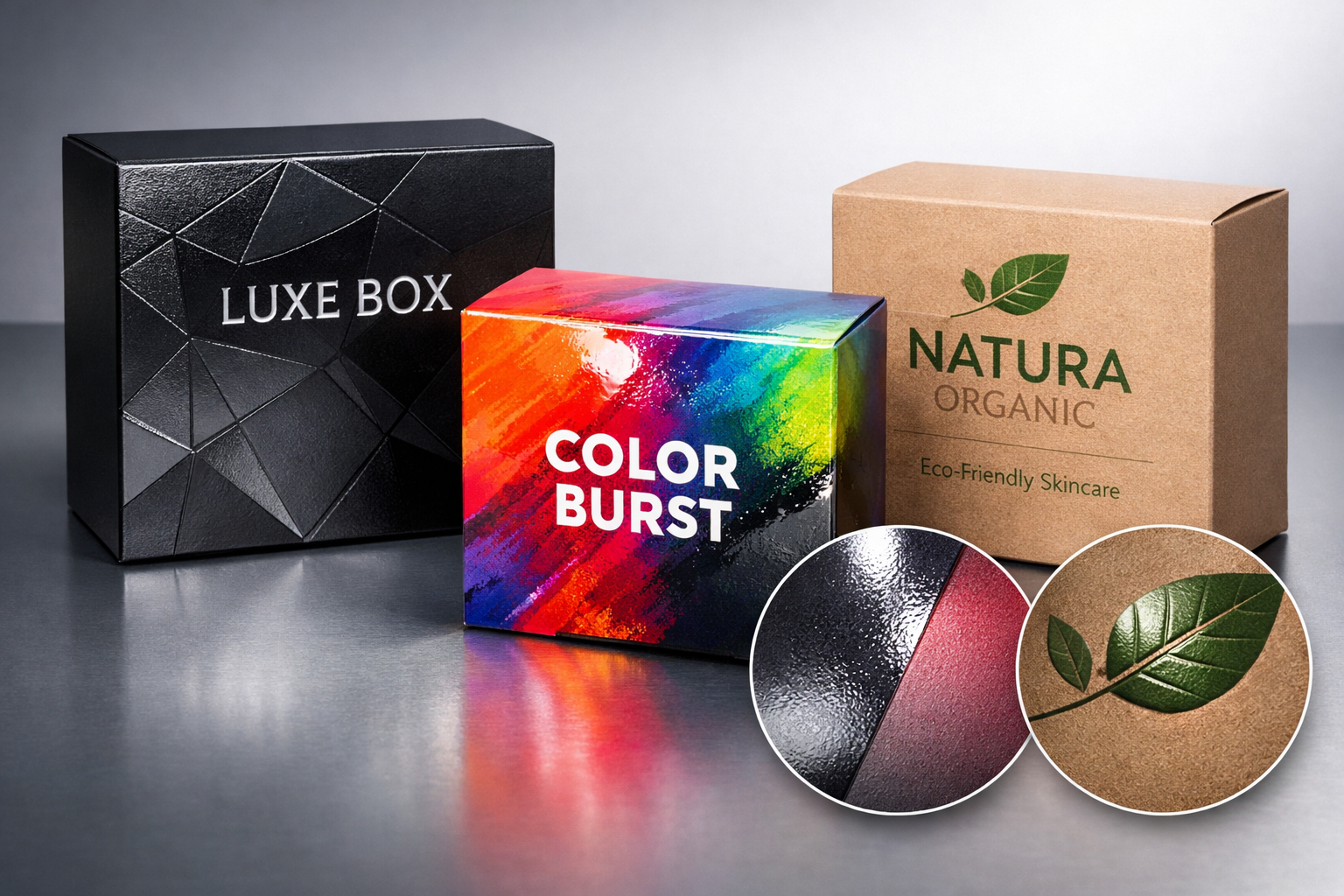
For brands that need energy and vividness, this is the right sort to pick. It not only makes the surface highly reflective, but also offers smoothness. The light bounces directly off the surface. Thus, enhancing the saturation of design elements. Moreover, it is highly effective for products that require a pop on the retail shelf. For example, toys and food items.
Matte Is for Elevated Soft & Premium Feel
Matte varnish scatters the light. Therefore, its function is quite opposite to the one we previously discussed. It appears dull and non-reflective. However, it perfectly smoothens the surface. This is why it is an appreciable choice for luxury businesses. This varnish used for sophistication is often best for high-end product packaging. On the other hand, it offers practicality and not just boosting the aesthetics. Matte varnish hides scuffs that occur during handling.
Satin or Silk Is a Practical Choice for Readability
This kind is somehow a blend of both the aforementioned varnishes. There is a subtleness of shine seen on the surface after its application. However, it is not as intense as the gloss varnish. Besides, it is smoother than matte. The best aspect here is the refined readability benefit. Satin or silk varnish reflects adequate light so that viewers can read the heavy text on off-the-shelf or custom printed packaging boxes. Therefore, you can consider it an ideal option for packages with instructional manuals.
Spot UV Forms a High Contrast & Enhances Tactile Experience
This one is famous and decorative for modern packaging. Its purpose is to create a stunning visual by applying high-gloss UV varnish only on particular places. The background should be matte, though. Therefore, a vibrant contrast is created and improves the tactile experience. Buyers grabbing the boxes with this varnish in hand can feel the Premiumness. Thus, the possibility of product purchase increases.
Ways to Apply Vanish During Production Run
For balancing quality and budget, learning about these techniques is highly essential. We are about to state three of them. First, the in-line application is during the primary printing process. The off-line coating occurs when the printed sheets have dried and are then transferred to another machine. The spot effect is attained when printers utilize special plates to drop varnish with precision. Lastly, we will elaborate on flood coating as well as targeted placement.
In-Line Varnish Application for Cost-Effectiveness
It happens during the primary printing process. The varnish is the extra hue on an offset or flexographic press and the application of clear liquid is when the substrate passes through the final units. Also, this application occurs when the primary inks are still fresh. It is useful in high-volume manufacturing, as there is no need for secondary setup and even the labor costs remain low.
Off-Line Coating Processes for Superior Thickness
This coating occurs as the second stage. The printed sheets have to be wholly dried and moved to a special coating machine. Therefore, there will be greater control over the volume of liquid. Also, the printers can achieve a much higher thickness with the help of a special coater. This approach is beneficial for high-end or luxury packaging. It results in a thick and smooth finish and acts as a barrier for moisture.
Spot Varnish Used for Achieving Precise Detail
As a designer, if you need to dictate to the buyer where to look, then this is the right technique. For its achievement, there are two prime methods utilized by printers. One is plate-based. The transformation of varnish is only to certain areas by the customized polymer plate. Another method is digital inkjet. In this technique, the modern digital presses jet varnish onto particular coordinates. Thus, it leads to precision.
Flood Coating & Targeted Varnish Placement
Flood coating is the hundred percent coverage of the substrate. For instance, a soft-touch flood coating to offer a velvet feel to the whole container. It can also become a protective layer. Alternatively, targeted placements only target some places. So, other areas remain free of coating. This causes branding or design elements to flash against the smooth background.
Pros & Cons of Varnish Used for Printing & Packaging
Pros:
It is more cost-effective than plastic lamination.
It is ideal to be applied to certain spots
The drying process is not too time-consuming.
Cons:
It does not provide superior resistance against water as lamination does.
The varnish can sink in on porous papers.
It can crack along fold lines if the cardstock is thick.
How to Choose the Right Varnish for Your Product
It depends on your goals and the substrate. For instance, the gloss varnish will look incredible on SBS. Conversely, kraft paper requires matte varnish. This is because the material absorbs the gloss finish and the result will be an unpleasant surface. Another approach is to value your requirements.
For long-distance deliveries, you might have to place the containers very close to each other in the vehicle. The probability of them rubbing is high. So, the varnish used for this purpose will be matte and its scuff resistance is vital. This will keep the packages in mint condition. Thus, it enhances buyer satisfaction.
The Differences Between Varnish, Aqueous Coating & Lamination
Let’s begin with: What is varnish for printing? It’s a clear ink and does not contain any pigment. Also, its application occurs very much like standard CMYK inks on an offset press. Varnish is very affordable and best for showcasing higher levels of detail. On the other hand, aqueous coating is a water-based choice and is safe for food packaging. Besides, it is apt for shipping boxes as it constructs a harder surface than standard varnish. Lastly, lamination is a layer of plastic film and relies on pressure and heat to bond to the substrate.
Conclusion
Varnish used for printing and packaging has various types, as illustrated above. Every type, like gloss, matte, satin and spot UV, serves a different purpose and makes the packaging surface smooth, reflective or a blend of both. Moreover, we have stated the techniques, such as in-line and off-line. Varnish is the most economical among its rivals; however, it does not offer too much durability. To learn about best possibilities for your business, speak to the experts at Boxit Packages.
.jpg)
