Everything to Know About Manila Envelopes and Their Sizes
Recent Posts
-
 Mushroom Chocolate Packaging Guide for... March 30, 2026
 -
 What Is the Standard Shoe... March 26, 2026
 -
 What Is Glassine Paper? Uses,... March 25, 2026
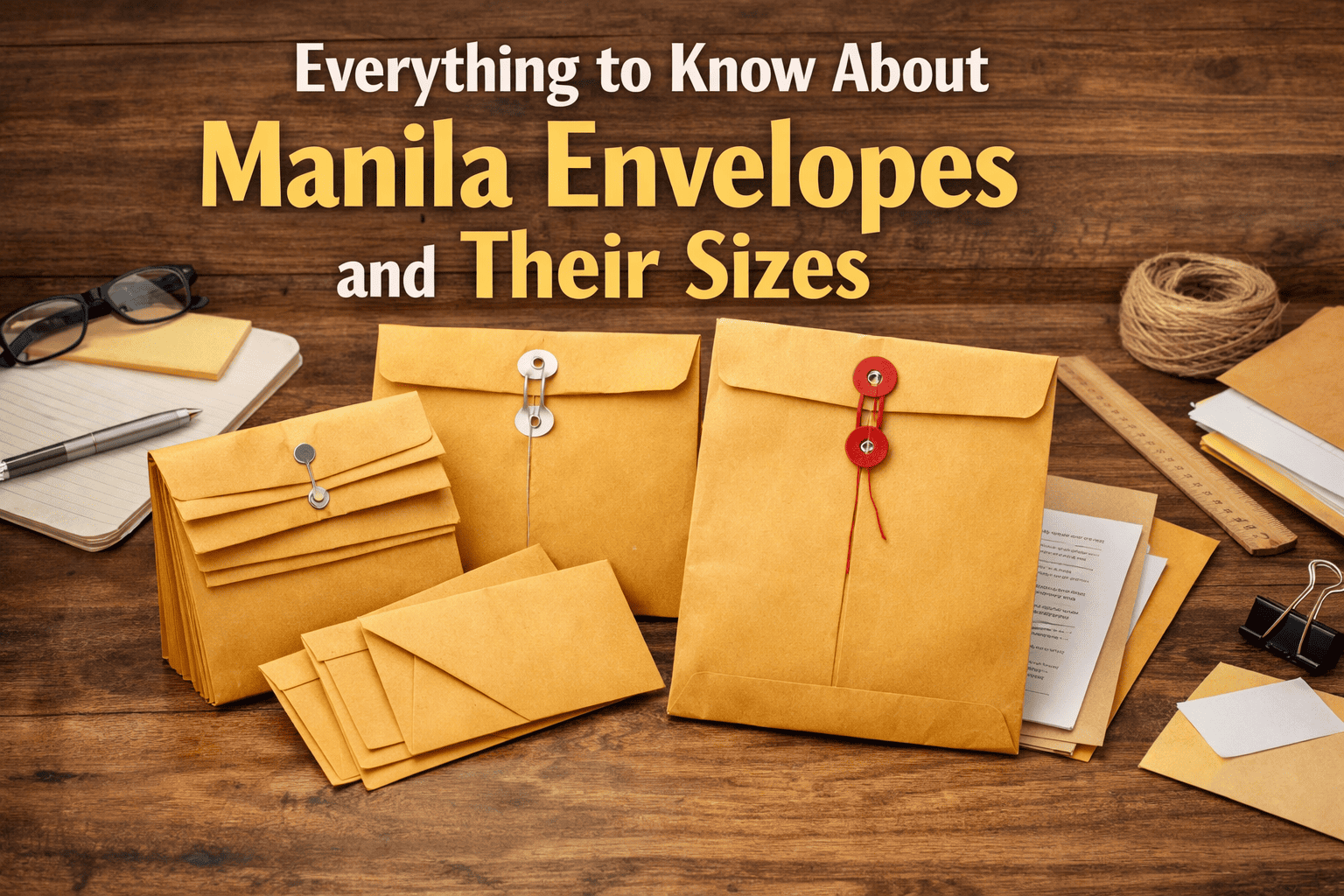
Whether it’s an important office document, a beautiful artwork by an artist, or a candid portrait by a photographer. Safety and presentation of the item are everything. When a standard white envelope is too flimsy, and a cardboard box is too bulky, that’s when the manila envelope steps in. It is a sturdy, light-brown envelope that is stronger than standard white bond paper and more flexible than a rigid mailer. It comes in different sizes and is used to mail a variety of materials like magazines, brochures, and files.
So, let’s dive into the world of Manila envelopes and find the perfect fit for your next project.
What is a Manila Envelope?
It is a light yellowish-tan colored, heavy-duty envelope designed for shipping and storing documents without folding them. Many people relate its name to its shape, but technically, its name comes from the material it is made from. The Manila Hemp. Manila Hemp is a fiber obtained from the leaves of the Abacá plant, which is native to the Philippines. These fibers are so long and resilient that true Manila paper is much harder to tear than standard paper. This is why it became the industry standard for legal files and interoffice mailers that get handled multiple times.
However, in the modern day, Manila envelopes are now made from recycled wood pulp or chemical wood fibers to save on costs. They are dyed with an iconic semi-bleached tan color to mimic the look of the original hemp-based paper.
The Top Advantages of Using Manila Envelopes
Now that you know the basics of what a manila envelope is. The next step is to find out what exactly makes this envelope the superior choice for professionals and businesses. The answer comes down to its three amazing benefits. It’s durable, versatile, and cost-efficient. Let’s take a look at them one by one.
High-end Durability
Yes, the best feature of a manila envelope is its rugged construction. It is designed from a long-fibered paper pulp that can withstand the rigors of the postal system and frequent handling. It will not tear or deliver the documents flat without any creases.
Unmatched Versatility
While many people use it for shipping office documents, magazines, and brochures. They don’t know it is a multi-purpose asset for any workplace. You can customize it into any shape and size for your catalogs, manuscripts, and resumes. You can write on it with markers, pens, and add stamps. Also, this paper is acid-free; therefore, it is perfect for long-term filing. It won’t degrade or yellow your important documents over time.
Cost-Efficient
For any business, small savings in the mailroom add up to significant annual returns, and this is the reason manila envelopes are the Goldilocks of the shipping world. Many standard Manila sizes qualify as “Large Envelopes” or “Flats” by postal standards. This allows you to ship stacks of documents at a much lower rate than if they were classified as a “Package” or “Parcel”. Moreover, these envelopes are often designed with metal clasps or a string-and-button closure. These closures allow multiple uses, which reduces the frequency of new orders and cuts down on both supply costs and waste.
Enhanced Privacy and Security
Apart from durability, versatility, and cost-efficiency, there is one more amazing benefit of using a manila envelope. It’s the protection of consumer privacy. Yes, you can mail your sensitive contracts, medical records, or legal transcripts through it. This thick, semi-bleached buff paper envelope will provide a 100% opacity. Even when held up to a bright light, the text inside will remain hidden.
Understanding Manila Envelope Sizes
Till now, we all know that Manila envelopes are versatile and can be customized into any size. But which size is the right one for your documents, certificates, and brochures? This is actually a problem. Usually, standard sizes are the backbone of the mailing industry, but to save your documents from transit damage, you need to ‘level up’ to a non-standard dimension. Here are the different Manila envelope dimensions. Take a look to choose the one that fits your shipping needs.
- 9″ x 12″ Envelope: This is the industry king and is used to mail standard 8.5″ x 11″ letter-sized documents.
- 10″ x 13″ Envelope: They are known as the “Heavy Lifter” and are ideal for holding thick stacks of paper and file folders.
- 6″ x 9″ Envelope: This is a small-sized envelope used for small booklets and flyers.
These three sizes handle 90% of all office and shipping needs, but before you place your documents, remember this thumb rule. For 1-10 sheets of flat paper, use a 9″ x 12″ envelope, and for 10-40 sheets or folders, get a 10″ x 13″ manila envelope.
Types of Manila Envelopes
There are different types of Manila envelopes based on their closure types. Choosing the right type of envelope is important because it is more than just sticking a flap down. It’s about balancing security, speed, and reusability.
Here is a breakdown of the four most common Manila envelopes based on their closures.
- Metal Clasp Manila Envelopes
- Manila Envelopes with Buttons and Strings
- Peal-and-Seal Manila Envelopes
- Traditional Lick-and-Stick Envelopes
How to Address a Manila Envelope?
Many people often ask how to address a manila envelope before shipping the documents so that it won’t return to the recipient. Well, the right way to address a manila envelope is to write the recipient’s name and address in the center. Place the return address in the top-left corner, and add postage to the top-right. Also, remember Manila paper is porous and textured, so avoid using fine-point gel pens, which can snag on the fibers. It’s better to use a permanent marker or a bold ballpoint pen. These provide the high contrast needed for optical character readers (OCR) at the post office to scan your mail.
A Guide to Making Your Own Manila Envelopes
Manila envelopes are fully customizable. From distinctive shapes to creative designs, you can get your envelopes in any size. The most reliable provider of Manila envelopes is Boxit Packages, the best company for custom packaging boxes in US. We offer our clients full control over the design process. You are free to choose creative, complex, or eye-catching designs along with a unique closure style to elevate the envelope presentation. All you have to do is provide us with your requirements by filling out the quotation form and placing your order.
Conclusion
The manila envelope has survived today’s digital age because it is the best solution for shipping and storing documents. It’s durable, private, and incredibly cost-effective. So, next time you reach for a mailer, take a second and pick the right size of the envelope for your documents. It will protect your important files and save you a high cost.
.jpg)
