

On this page
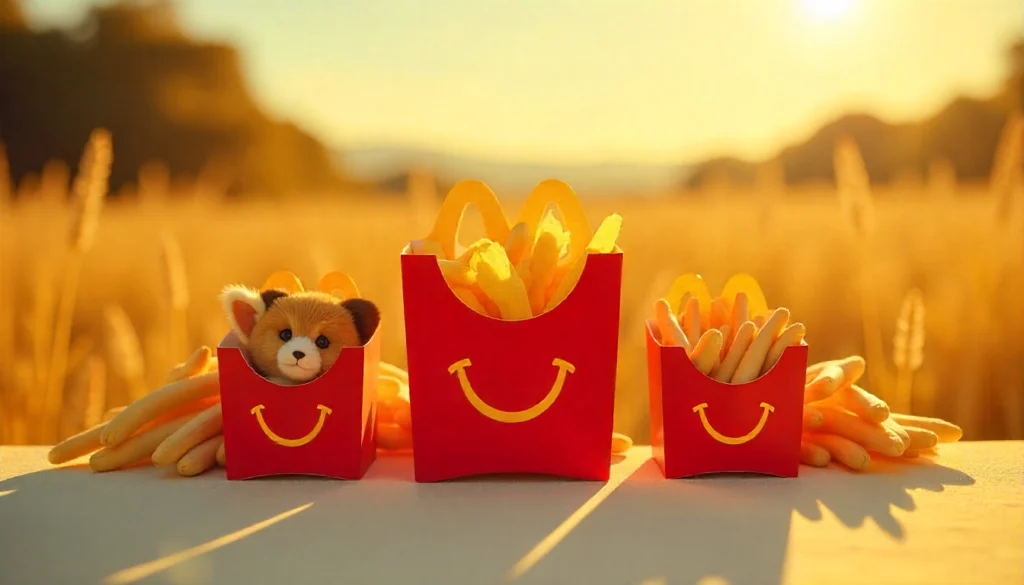
Think about the most successful product packaging in history. The tall, cylindrical Pringles can? The iconic Tiffany & Co. blue box? Right alongside them sit the McDonald’s Happy Meal boxes. This box is not just a container. It’s a blast from the past with many childhood memories and an iconic piece of pop culture design all rolled into one. However, the design of this iconic packaging or mcdonalds happy meal box has responded to significant shifts. Either due to technological shift or environmental awareness. Read this blog to explore how packaging trends have shaped the very first “Circus Wagon” design into the signature red and yellow box.
The Birth of the Happy Meal Box
The idea of this iconic packaging came from a brilliant Guatemalan businesswoman and an advertising executive’s inspired gaze at a cereal box. This old mcdonalds happy meal box was just a simple, gable-topped cardboard container with handles shaped as the golden arches. The concept behind this design was the resemblance with a lunch pail. So that it becomes easy for kids to carry around. Originally the box looked like “Circus Wagon” printed with a red, yellow color scheme and whimsical characters. Whereas its top and side panels were covered with jokes, games, puzzles, and stories. Just to turn packaging itself into an activity.
This was the first time in history McDonalds added an element of surprise in their packaging. Yes along with tasty hamburger, fries, and a cookie, there was a toy, too. Adding a toy was more of a marketing strategy that not only resulted in a memorable experience for kids. But profited the brand with repeat business.
Let’s explore the shifting aesthetics of this iconic packaging in the last five decades.
The marketing powerhouse and collectible item
In 1979, for the first time McDonald’s changed its marketing strategy. It used a kids movie ” Star Trek: The Motion Picture” to promote a happy meal. Almost 6 vintage design boxes were released over the course of a multi-week promotion. Structurally the container was an old gable box. However, it features heroes and villains of the movie with puzzles related to the movie’s plot and limited-edition toys. Thus, making the box a collectible item. The success of this promotional box created opportunities for many film campaigns like “The Lion King”, “Shrek” and “Angry birds”. Since then, this iconic packaging is branded with promotional materials.
The seasonal celebration box
In 1986, McDonalds released its first reusable packaging product line. This was the Halloween Happy Meal Pails. Originally there were three buckets, the Pumpkin, the Ghost, and the Witch, made from reusable plastic. The idea was to give children a trick-or-treat container once they are done eating their meal. This utility transformed simple disposable packaging into a treasured seasonal item. Among all the marketing strategies of McDonalds, this was the smartest move. As it solidified the use of themed packaging for various holidays. And create the benchmark for seasonal aesthetics.
The interactive iconic packaging
This trend took a boom in the 1990s where packaging was made an active part of the consumer experience and eco-awareness was on the rise. The box was totally redesigned to serve as a tool for engagement. Symbols of recycling began to appear along with pop-out cutouts. There were cutout patterns along with instructions to repurpose the box into a phone stand, a book holder, or a holiday figurine in case of a holiday. This added functionality and reduced waste by giving a happy meal box a second life.
The shift towards sustainability and functionality
With growing plastic pollution and environmental awareness. McDonalds made a drastic move towards certified and recycled materials from 2000 onwards. This was when the iconic red yellow happy meal box was introduced with golden arches forming a “M” logo. The box was made from corrugated cardboard, a 100% recycled material. Heavy graphics and illustrations begin to fade away and the box was printed with minimalist elements and food content & ingredients. The most significant change was the replacement of traditional plastic in happy meal toys. Only toys made from PET plastic wrapped with paper-based packaging were used. As of today, this very box is used for the Happy Meal we buy.
Innovations in a Happy Meal box for convenience
Although, seeing a McDonald’s iconic happy meal box brings joy for the kids. But it is a four-handed operation for parents. Balancing a cup, a box, and a wriggling child is a perennial challenge. Therefore, McDonald has modified the happy meal box dimensions and structural design to make packaging more compact. Moreover, the addition of compartments has enhanced the internal stability. Now, there are built-in sauce holders, and separate compartments for burger and fries to prevent food from spilling.
Also, McDonalds has made positive use of AR technology. Integrating AR in custom printed boxes with logos has replaced physical plastic toys. Now kids can enjoy online games and even learn some educational content. A good example of this is, “McMission”, a McDonalds Germany app educating the young generation about recycling through mini-games. These smart, functional innovations have made life simpler. And raised the bar for packaging in the food industry.
Conclusion
The evolution of a happy meal box is a case study in effective experiential packaging. From maximizing the box’s functional space to transforming it into a promotional tool and sustainability miracle. Every feature of these custom food boxes in bulk is designed to engage the audience, repeat business, and build brand loyalty. By adapting to different trends of every era, this box has come a long way and will obviously last.
Need custom printed boxes?
Contact us
.jpg)