On this page
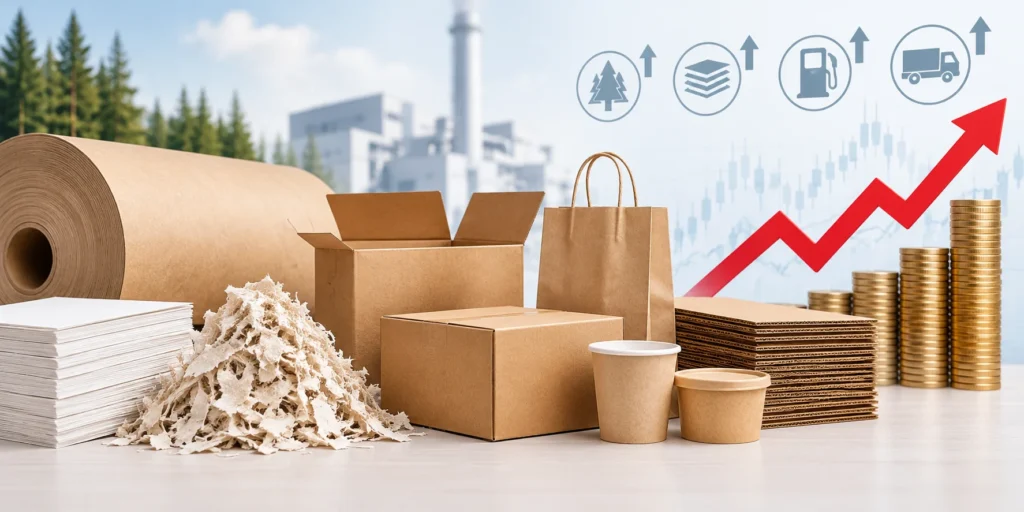
Rising Packaging and paper costs impact the paper industry. Increasing raw material prices, energy, labour, freight, and import costs are putting pressure on mills, converters, and buyers. Basic items in the supply chain, from raw materials to packaging, are now becoming a big budget item in global production networks due to increasing packaging and paper costs. Prices are no longer short-term fluctuations but a permanent fact due to structural changes, new trade policy, and ESG rules. Industry data released by Packaging Gateway has revealed that packaging inflation is becoming an economic floor and prompting businesses to reconsider their buying and business operations. In the meantime, Business Recorder’s financial reports focus on how energy markets and currency changes continue to swirl into a frenzy within international manufacturing industries worldwide. This extensive guide explores the root causes, industry impacts, and cost-saving solutions that can help businesses avoid these risks and protect their profit margins today.
What Is Driving Costs Up?
Expensive materials, the rising cost of printing, and the high price of shipping all work together and are changing the way converters are pricing custom packaging boxes. From raw material shortages to running trade barriers, a range of factors play a role in continually pushing up the cost of production at each stage of the process. The main reasons for these cost increases are summarized below, and the industry segments most affected by these increases are identified.
| Cost Driver | What Changed | Who Feels It Most |
|---|---|---|
| Raw Materials | Fiber, pulp, resin, and adhesive prices fluctuate heavily due to supply bottlenecks. | Board converters, custom box buyers |
| Energy | Electricity and natural gas rates remain high, raising manufacturing overhead. | Paper mills, pulp processors |
| Labor | Wage inflation and skilled labor shortages persist across manufacturing facilities. | Box plants, converting facilities |
| Freight | Trucking rates, fuel surcharges, and ocean shipping fees shift unpredictably. | High-volume shippers, distributors |
| Tariffs | Cumulative duties hit imported pulp, paperboard, and processing machinery. | Global sourcing brands, importers |
| Compliance | Extended Producer Responsibility (EPR) laws add direct regulatory fees. | Consumer brands, retail packaging |
Each individual stage of manufacture contributes to the per-unit bill of materials, and when it reaches the end user, it’s one thing that needs to be addressed for packaging supply chain challenges and cost control in the system in the long term.
Why Are Packaging Costs Increasing?
Poor raw material pricing
There are regular interruptions to pulp and virgin fiber supplies from timber harvesting restrictions and weather conditions. Mills have to contend with rising raw material costs due to strong global demand for OCC, a recycled fiber grade. OCD demand is putting pressure on raw material costs for mills. When pulp supplies get tight, containerboard and bleached paperboard prices go up. In addition, the crude oil impact on packaging directly raises the packaging cost of synthetic resins, protective barrier coatings, and adhesives for custom packaging boxes cost.
Higher energy costs
Timber has to be fed continuously and in huge quantities of steam and electric power to make paper. When natural gas prices or charges on the grid go up, paper mill operating budgets get tight. Mills impose these utility spikes as a required surcharge on the energy cost per ton in their converter plants. Box converters will then need to pass on the cost increases in utilities to their end packaging buyers, which need to be passed on rapidly.
Shortage of Labor, Wage Growth
Paper industries are facing a serious manpower crunch of experienced Press Operators and Machinery Technicians due to the retirement of the older ones. Plants need to increase base salary, provide overtime, and provide substantial training investments to draw in and keep quality employees. This greater payroll cost will always increase the base pay of manufacturing costs, and thus the package manufacturing cost.
Freight and logistics pressure
Diesel transport is used for moving wood logs, heavy paper rolls, and finished boxes. Shortages in drivers, increased driver costs, and ocean shipping fees increase costs at every step. Corrugated boxes can be light, yet bulky, making them challenging to handle and transport. Folded boxes need to be packed in a delivery trailer quickly to avoid a volume penalty; this means that shipping can be a significant part of the total cost of the box.
Trade policy, tariffs
Import and export taxes affect the cost of procurement throughout the chain. Storey has put together these official government trade reports from the USITC that demonstrate why tariffs on imported pulp, machinery and paperboard help raise domestic prices. Foreign materials take on duties, and consumers turn to domestic materials, increasing regional demand and costs.
Sustainability and regulatory costs
Extended Producer Responsibility (EPR) legislation imposes fees on brands to help recyclers, and mandatory recycled-content legislation forces material sourcing to be done carefully. Tracking overhead is incurred by keeping Forest Stewardship Council (FSC) certifications. In addition, paper mills invest significantly in green processing improvements and low-emission boilers and pass the cost of these investments to the buyer over time.
Capacity changes and mill closures
To preserve operating margins, paper companies tend to shut down older, less productive equipment or turn their graphic paper factories into containerboard mills. Conversions are a way to meet long-term box demand, but permanent closings eliminate swing capacity. As demand returns, with tight supply, surviving mills will have solid pricing power, maintaining high box prices.
Capacity changes and mill closures
Brands can stay ahead of material and transport price increases by taking proactive measures, as macroeconomic factors continue to push up material and transport costs. By overhauling packaging design, reviewing your materials, and making a switch in procurement, you can save and improve packaging protection without delay.
How Businesses Can Respond and Protect Margins
- Right-size packaging and minimize material usage: Reduce dimensions of structural flap, minimize air space, and eliminate unnecessary internal structural materials to minimize box dimension fees and box material usage.
- Lock in longer-term contracts, and negotiate index-based pricing: Pre-negotiate contracts with trusted converters for several years in advance, in order to prevent significant spot-market price fluctuations.
- Have multiple suppliers in different regions: Order products from a variety of converting plants in various regions to reduce the effect of interruptions in delivery or downtime at any particular plant.
- Reduce custom box catalog items and dimensions: Reduce the number of custom box dimensions and items in your custom box catalog to maximize volume and order quantities, reduce warehouse space requirements, and minimize press set-ups.
- Investigate recycled or alternative materials: Determine lightweight grades of recycled paperboard that have comparable structural stacking strength and require much less basic fiber per carton.
- Smartly pass costs through with transparency: Implement transparent shipping charges and/or a tiered cost structure rather than a sudden flat-rate price hike on retail product lines.
What’s Ahead for 2027?
The pressure on costs is shifting from short-term market fluctuations to industry long-term baselines in the paper and packaging industry. These long-term dynamics can help strategic planners to create more resilient budgets, which can better weather future market fluctuations.
The cost of energy in industrial use, water use fees and environmental compliance costs will continue to be high into 2027 and beyond. Conditions may be expected to be more stable for freight rates, but labour costs will remain high as regional logistics networks fully accommodate the changing trade routes, while there remain chronic structural shortages of technical manufacturing talent.
Custom box plants are actively researching and investing in high-speed digital printing machines as well as automated box-sizing systems. Digital printing removes the need for costly plates, and cuts down on machinery set-up time, making short runs far more cost-effective for brands growing in size that are looking to custom packaging boxes.
Conclusion
Rising Packaging and Paper Costs directly result from increased raw material costs, the cost of energy, a shortage of labor, freight pressures, tariffs, and reduced mill capacity. These are all fundamental changes in the global supply chain, and it is far better to plan ahead than to wait until the prices have risen. To avoid variable costs, standardise packaging sizes, right-size packaging designs and agree multi-year contracts with vendors.
Looking to shield your margins and cut down on superfluous supply chain costs? Get a quote or pick up our no-cost packaging cost-saving checklist now to get started optimizing your box specs.
Need custom printed boxes?
Contact us